The present-day U.S. military qualifies by any measure as highly professional, much more so than its Cold War predecessor. Yet the purpose of today’s professionals is not to preserve peace but to fight unending wars in distant places. Intoxicated by a post-Cold War belief in its own omnipotence, the United States allowed itself to be drawn into a long series of armed conflicts, almost all of them yielding unintended consequences and imposing greater than anticipated costs. Since the end of the Cold War, U.S. forces have destroyed many targets and killed many people. Only rarely, however, have they succeeded in accomplishing their assigned political purposes. . . . [F]rom our present vantage point, it becomes apparent that the “Revolution of ‘89” did not initiate a new era of history. At most, the events of that year fostered various unhelpful illusions that impeded our capacity to recognize and respond to the forces of change that actually matter.

Andrew Bacevich


Tuesday, June 5, 2007

News & Views 06/04/07

Photo: Residents stand near a mass grave for Tuesday's bombing victims in Baghdad June 3, 2007. Dozens of residents became homeless after a bomb attack in a market in Baghdad's Amil district which killed 19 people and wounding 71 others on May 29. (Ali Jasim/Reuters)


REPORTS – LIFE IN IRAQ

Curfew leaves Bagdhad suburb residents in trouble

Clashes between rival Sunni militant groups in the Sunni neighbourhood of Amiriyah in western Baghdad have left residents facing acute difficulties. In a bid to restore calm after the last week of clashes, the Iraqi authorities and US forces imposed a curfew, adding to residents’ problems. "This is our seventh day indoors and we have run out of basic essentials," said Sarhad Abdul-Ghafour Amin, a 48-year-old taxi driver from Amiriyah. "Shops have been closed for the last week… and we can't venture out to other areas for fear of being shot by militants or US and Iraqi forces," Amin, a father of five, told IRIN. "We have already run out of meat, vegetables, mineral water and fuel for the generator. We have only flour and eggs and are forced to drink dirty water. I have just eight blood pressure tablets left and it will be a real catastrophe for me if I can't get more," he added. On 29 May, fighters from the Islamic Army in Iraq and the 1920 Revolution Brigades clashed with al-Qaeda in Iraq. Iraqi and US troops fanned out in the neighborhood on 31 May and enforced an indefinite curfew. "My nine-year old son has diarrhoea due to drinking dirty water and I can't take him to hospital," said Faiz Mohammed al-Janabi, a 51-year-old government employee from Amiriyah. "Me and my wife can’t go to work and the children are not able to do their final exams,” al-Janabi added.

Reporters Without Borders calls for special unit to protect journalists

Paris-based media watchdog Reporters Without Borders (RSF) has called for the creation of a special task force to protect journalists as violence claimed the lives of at least five Iraqi journalists last week. RSF urged the Iraqi authorities on 31 May to establish a special police unit to investigate the killings of journalists and organise awareness programmes among Iraqi security forces and the public. "The Iraqi authorities must fulfil their duty to protect journalists," the group said in a statement on its website. “We call for the creation of a special force within the national police to identify the perpetrators and instigators of the killings of journalists.” RSF also recommended that a witness protection programme be set up with the help of Iraq's neighbours to aid investigations. An official in the Iraqi Cabinet, who spoke on condition of anonymity as he was not authorised to talk to the media, told IRIN that RSF’s proposal had been circulating in government corridors but would be hard to implement because of the deteriorated security situation in the country.

Sick of Their Government

Reports of the poor health among high-ranking Iraqi politicians are being seen as symbolic of the popular mood here about the U.S.-backed government. In late February, Iraqi President Jalal Talabani was flown to neighbouring Jordan for medical treatment amid conflicting reports about his health. Sources in Amman and from Talabani's office in Baghdad told reporters that the 73-year-old had suffered a stroke, but in a televised interview his son said that Talabani was suffering from fatigue or exhaustion. Meanwhile, Shi'ite leader Abdul Azizi al-Hakim, leader of Iraq's largest Shia party, recently arrived in Iran for treatment for lung cancer after being diagnosed at a hospital in the southern U.S. state of Texas. This development, in particular, is expected to create chaos within the Supreme Islamic Council in Iraq, the political organisation the George W. Bush administration has counted on to push through legislation, particularly regarding the new Iraqi oil law. The ailments of their leaders are not just perceived as physical by many Iraqis.

"It is a sick government right from the start and these people's absence shows the huge size of the chaos in Iraq," Waleed Zaidi, a political analyst in Baghdad told IPS. "The truth about rumours does not count as much as the solid fact that all those who are supposed to lead the country to stability are abroad for different reasons. A close look at the Iraqi scene shows that no one is really working to improve the situation." The Iraqi Parliament has not been functioning as it should either. In fact, the chaos in its meeting hall reflects the huge divisions amongst interest groups outside. "To say the truth for history, one must admit that we are not doing much for those who voted for us hoping we would improve their living conditions," a member of the Iraqi Parliament, who requested anonymity, told IPS. "We have our justifications for not being able to serve. Starting from the difficulty in reaching the parliament building to the daily threats to our lives inside and outside the so-called Green Zone." Over the past year, an increasing number of Iraqis have begun to see the Iraqi government as no more than pawns of the United States.

Tension rises over Kirkuk

Rival minorities are at loggerheads over the fate of the oil-rich city of Kirkuk. As Kurdish leaders vow to include Kirkuk within their semi-independent enclave, other minorities in the city say they will oppose the move with all available means. President Jalal Talabani, a Kurd, and Massoud Barzani, head of the Kurdish enclave in northern Iraq say they would not accept any constitutional amendment to a paragraph calling for a referendum in the city. The paragraph, known as article 140, is among the most contentious in the constitution which Iraqi Sunnis would like to see substantially revised to preserve the country’s national unity. The Kurds want the referendum to take place at the end of the year as stipulated by the constitution because they believe they now have numerical superiority in the city. Other ethnic minorities accuse the Kurds of attempts to change the city’s demographic structure in the years since the downfall of former leader Saddam Hussein. “We are determined to apply article 140 of the Iraqi constitution regarding the normalization of conditions in Kirkuk,” said Talabani. But Iraqi Turkmen and Arabs who live in the city and its suburbs are openly resisting Kurdish attempts to annex Kirkuk.

41 bodies buried in Kirkuk as families fail to retrieve them from morgue

Religious and Social Affairs Committee in Kirkuk has buried 41 bodies of people killed in the escalating sectarian and ethnic strife in the oil-rich city. The bodies were buried when relatives failed to claim them from the city’s hospital morgue. Morgues in Iraq can hardly cope with the inflow of bodies and often they have to bury those not retrieved by families after two months. A medical source said the bodies bore marks of torture and some were greatly deformed. The authorities photograph the bodies and mark the graves in the hope their families would one day have them retrieved.

Iraqi firm supplies government with generators

The State Enterprise for Electrical Industries has boosted its manufacture of small power generators to meet booming demand. Demand for generators has soared due to drastic decline in power output from the national grid. Government offices and public service utilities suffer outages of up to 20 hours a day. The government has turned to small power generators to keep its offices and utilities such as hospitals running. “The company now supplies both the private and public sectors with generators of various sizes and types,” said a statement the company issued recently. The statement said the company has manufactured this year more than 400 generators with various capacities. It said currently many hospitals in Iraq as well as other utilities such as sewage systems rely on the company’s products.

Anger Builds in Falluja Over Security Crackdown

The city that was mostly destroyed by the U.S. military operation Phantom Fury in November 2004 has been under curfew for over two weeks, with no signs of relief. Located 70 kms west of Baghdad, the city made headlines when four Blackwater USA security mercenaries were killed and their bodies horrifically mutilated on Mar. 31, 2004.
That April the city was attacked by the U.S. military, but resistance fighters repelled occupation forces. That set the stage for the November siege which left approximately 70 percent of the city destroyed and turned a quarter of a million residents into refugees.
A recent spike in attacks against Iraqi and U.S. forces in and around the city has prompted harsh measures by the U.S. military, including imposing curfews, limiting movement in and out of Fallujah, and setting up more checkpoints throughout the city -- moves which have greatly angered residents. On May 19, most of these measures, perceived by many people here as a form of collective punishment, began to be more strictly enforced. "Americans and their Iraqi collaborators are blaming us for their failure in controlling the city and the whole country," Ahmed Alwan of the Sunni religious group the Muslim Scholars Association told IPS. "This kind of collective punishment only means slow death to the people of the city and is adding to their agonies that have continued since April 2003."

………."Human life is worth nothing in Fallujah these days," said Jameel Nassir , a 21-year-old university student. "The government soldiers executed so many young men, just like what happened in Haditha, and the new security force conducted massive killings against us while Americans pay both armies millions of dollars to do the dirty work for them." This sentiment is common now in Fallujah. "All army and security forces in Fallujah are monsters," Bilal Ibrahim, a journalist in training in Fallujah, told IPS. "I watched one of their inhuman acts today and realised how brutal they really are. A young man jumped in the river for a swim near the hospital, but he was swept by the current and he was screaming for help. We were ready to save his life, but soldiers started shooting at us and they were laughing at the drowning guy until he died." IPS learned that the young man's name was Mohammed Hikmet and he was a member of a well-known family in the city.

Local tribes in south set up schools

Shia Muslim tribes in Iraq’s southern provinces have begun setting up their own schools in an effort to prevent their children losing another academic year due to insecurity. Using empty mosques, the homes of tribal leaders and open areas, 21 temporary schools in Basra, Missan, Najaf and Kerbala provinces will eventually provide free education to some 2,000 children. Teachers will be paid by the local community. “As violence was increasing and our children were unable to go to schools we decided to make our own,” Khalid Hussein Ala’a, a Shia tribal leader and one of the original initiators of the project, said, noting that most schools in the area were already overburdened with a large number of newly displaced children. “The only problem we had was finding enough books and related materials for the children, but fortunately good people offered us the money we needed to buy these items. Now, hundreds of children have access to education again,” Ala’a said.


REPORTS – IRAQI MILITIAS, POLITICIANS, POWER BROKERS

Moqtada al-Sadr: The man America has in its sights

The US wants to talk to Moqtada al-Sadr. He thinks they want to assassinate him. In this rare interview in Kufa, Iraq, the Shia cleric tells Nizar Latif why. Moqtada al-Sadr, the man Washington blames for its failure to gain control in Iraq, has rejected a call to open direct talks with the US military and has accused the Americans of plotting to assassinate him. The Shia cleric told The Independent on Sunday in an exclusive interview: "The Americans have tried to kill me in the past, but have failed... It is certain that the Americans still want me dead and are still trying to assassinate me. "I am an Iraqi, I am a Muslim, I am free and I reject all forms of occupation. I want to help the Iraqi people. This is everything the Americans hate." Mr Sadr, revered by millions of Iraqi Shias, spoke after leading Friday prayers in the Grand Mosque at Kufa, just over 100 miles south of Baghdad. It is one of the four Iraqi cities considered holy in Shia Islam. He always wears a black turban, the traditional symbol of a Shia cleric who can trace his ancestry to the Prophet Mohamed. But for the second time in two weeks, he also wore a white shroud - a symbol of his willingness to be martyred, and his belief that death is close at hand. The young cleric inherited the aura of his father, Ayatollah Mohammed al-Sadr, who was murdered by Saddam Hussein's regime. He has been a thorn in the side of the Americans since the invasion, with his Mahdi Army - the military wing of Iraq's largest Arab grassroots political movement - having clashed with US and British forces. The movement has been accused of kidnapping five Britons in Baghdad last week, possibly in retaliation for the death of a senior Mahdi commander in Basra at the hands of British forces, but the Sadrists deny involvement.


REPORTS – US/UK/OTHERS IN IRAQ

US, Iraqi troops control a third of Baghdad

U.S.-led soldiers control only about a third of Baghdad, the military said on Monday, almost four months into a security crackdown during which troops are dying at rates not seen for more than two years. More than 18,000 extra U.S. troops have been deployed around Baghdad as part of the campaign, which began in mid-February and is seen as a last-ditch attempt to drag Iraq back from the brink of all-out sectarian civil war. The last of five brigades to be deployed in the crackdown will be in place soon, military spokesman Lieutenant-Colonel Christopher Garver said, adding that it would not be possible to judge the crackdown's success until all units were in place. "Obviously we're constantly doing an assessment of the plan, but that plan doesn't kick in until everyone's here. We control about a third of the neighbourhoods," he said. But with violence spiking across Iraq as Sunni Islamist al Qaeda and other militant groups try to derail the crackdown, U.S. President George W. Bush and military commanders have warned that a bloody summer lies ahead. "It's going to get harder before it gets easier," Garver said of the counter-insurgency effort. "We know it's going to be a tough fight over the summer."

Commanders say push in Baghdad is short of goal

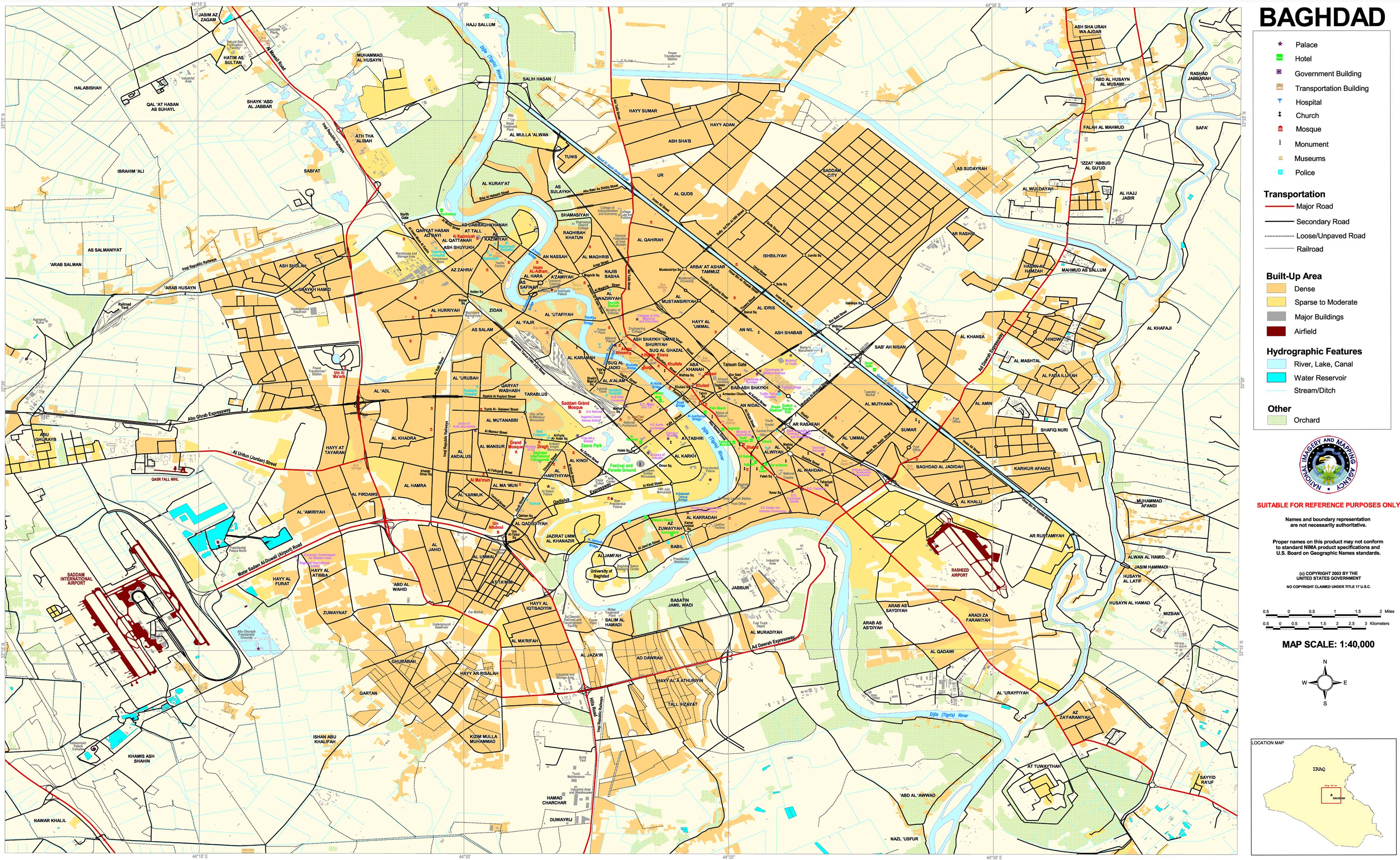
Three months after the start of the Baghdad security plan that has added thousands of American and Iraqi troops to the capital, they control fewer than one-third of the city's neighborhoods, far short of the initial goal for the operation, according to some commanders and an internal military assessment. The American assessment, completed in late May, found that American and Iraqi forces were able to "protect the population" and "maintain physical influence over" only 146 of the 457 Baghdad neighborhoods. In the remaining 311 neighborhoods, troops have either not begun operations aimed at rooting out insurgents or still face "resistance," according to the one-page assessment, which was provided to The New York Times and summarized reports from brigade and battalion commanders in Baghdad. The assessment offers the first comprehensive look at the progress of the effort to stabilize Baghdad with the heavy influx of additional troops. The last remaining American units in the troop increase are just now arriving. Violence has diminished in many areas, but it is especially chronic in mixed Shiite-Sunni neighborhoods in western Baghdad, several senior officers said. Over all, improvements have not yet been as widespread or lasting across Baghdad, they acknowledged.

Turkish forces shell northern Iraq - Iraqi leader

Iraq said Turkish forces shelled a mountain stronghold of Turkish Kurd rebels in the north of the country on Sunday, a day after it urged Turkey to use diplomacy to resolve rising tensions in the region. While residents say Turkey shells the area almost daily, the latest attack came days after Turkey moved tanks to its border and speculation mounted that Prime Minister Tayyip Erdogan's government is planning a military incursion. "There were some strikes from Turkish forces on areas next to the Turkish border, but until now there has been no Turkish military invasion of Kurdish lands in Iraq," Masoud Barzani, president of Iraq's Kurdistan region, told a news conference. Iraq's president, Jalal Talabani, also a Kurd, told the same briefing that "we do not accept interference in others' affairs and we do not accept interference in our affairs". The Turkish shelling targeted Haji Umran, a mountainous area which fighters of Turkey's separatist Kurdistan Workers Party (PKK) use as a springboard to carry out attacks in Turkey. Residents told Reuters the attack lasted about 30 minutes and caused no casualties. On Saturday, Iraq's Prime Minister Nuri al-Maliki said Turkey should not resort to "threats, forces and weapons" as this would only worsen the situation. He made no reference to Turkey's repeated request for U.S. and Iraqi troops to hunt down the rebels.

The security industry: Britain's private army in Iraq

Baghdad is a city where there is no safety and no law, but the five Britons - a computer consultant and his four-man security detail - would have been entitled to feel relatively secure inside the Finance Ministry. The building was heavily guarded by uniformed Iraqi police and paramilitaries. It was a Tuesday morning, and Palestine Street was busy, with more people venturing out since the US-led security "surge" damped down the violence in the centre of the Iraqi capital. Yet in broad daylight, a convoy of vehicles with up to 40 men, some in the camouflage uniforms of special police commandos, was able to drive up to the ministry and pass through the gate. The men headed straight for where the Britons were working, took them without a struggle and drove off. Even by the standards of the most dangerous city in the world, it was an especially brazen kidnapping. Nothing has been heard of the victims since. The search for them has focused on Sadr City, the giant Shia slum on the outskirts of Baghdad that is the stronghold of Moqtada al-Sadr's Mahdi Army. Not only did witnesses say that the convoy headed in that direction after leaving the ministry, but the militia is thought to be one of the few groups with the contacts inside the Iraqi government to carry out the operation.

Hoshyar Zebari, the foreign minister, said last week that the Palestine Street area was in the Mahdi Army's "field of operations", adding: "It has been known for some time that the Interior Ministry police, security units and forces are corrupt, are penetrated." According to British officials, the kidnappers would never have got through the gate if the guards had been Sunnis or Kurdish. A senior Mahdi Army figure has denied that the militia was involved. But if the circumstances are mysterious, the abduction has cast light on the way Iraq's bloody chaos has given birth to an entire private security industry, one in which British companies are among the leaders. The irony is that a decreasing proportion of their employees, and clients, are British. If the kidnapping was aimed at Britain, as some believe, to avenge the death of a senior Mahdi Army commander in Basra recently at the hands of British troops, those who carried it out would have had to be especially well informed, because neither the consultant nor his protectors was working for British employers.

The Interrogators

Lagouranis's tools included stress positions, a staged execution and hypothermia so extreme the detainees' lips turned purple. He has written an account of his experiences in a book, "Fear Up Harsh," which has been read by the Pentagon and will be published this week. Stephen Lewis, an interrogator who was deployed with Lagouranis, confirmed the account, and Staff Sgt. Shawn Campbell, who was Lagouranis's team leader and direct supervisor, said Lagouranis's assertions were "as true as true can get. It's all verifiable." John Sifton, a senior researcher for Human Rights Watch, said the group investigated many of Lagouranis's claims about abuses and independently corroborated them. "At every point, there was part of me resisting, part of me enjoying," Lagouranis said. "Using dogs on someone, there was a tingling throughout my body. If you saw the reaction in the prisoner, it's thrilling." In Mosul, he took detainees outside the prison gate to a metal shipping container they called "the disco," with blaring music and lights. Before and after questioning, military police officers stripped them and checked for injuries, noting cuts and bumps "like a car inspection at a parking garage." Once a week, an Iraqi councilman and an American colonel visited. "We had to hide the tortured guys," Lagouranis said.

Then a soldier's aunt sent over several copies of Viktor E. Frankel's Holocaust memoir, "Man's Search for Meaning." Lagouranis found himself trying to pick up tips from the Nazis. He realized he had gone too far. At that point, Lagouranis said, he moderated his techniques and submitted sworn statements to supervisors concerning prisoner abuse. "I couldn't make sense of the moral system" in Iraq, he said. "I couldn't figure out what was right and wrong. There were no rules. They literally said, 'Be creative.' " Lagouranis blames the Bush administration: "They say this is a different kind of war. Different rules for terrorists. Total crap."


How to Help Iraqi Refugees

Quote of the day: "I refuse to be silent any longer. I refuse to be party to an illegal and immoral war against people who did nothing to deserve our aggression. My oath of office is to protect and defend America's laws and its people. By refusing unlawful orders for an illegal war, I fulfill that oath today." - U.S. Army First Lt. Ehren Watada

Monday, June 4, 2007

Security Incidents for Monday, June 04, 07


In Country:
#1: U.S.-led forces have control of fewer than one-third of Baghdad's neighborhoods despite thousands of extra troops nearly four months into a security crackdown, a newspaper reported Monday — an assessment that came as the U.S. casualty toll soared. The New York Times said an American assessment of the security plan through late May found that American and Iraqi forces were able to "protect the population" and "maintain physical influence over" only 146 of the 457 Baghdad neighborhoods. Troops have either not begun operations aimed at rooting out insurgents or still face "resistance" in the remaining 311 neighborhoods, according to the report, which cited a one-page assessment along with summaries from brigade and battalion commanders in Baghdad.


Baghdad:
#1: A roadside bomb killed three people and wounded eight in Zaafaraniya district of southern Baghdad, police said.

#2: The Iraqi army killed seven insurgents and arrested 57 others during the past 24 hours in different areas of Baghdad, police said

#3: A bomb planted inside an ambulance killed one person and wounded three others in the Bab al-Muadham area of central Baghdad, police said.

#4: In a separate incident, one person was killed and five others wounded due to clashes between security forces and gunmen in Al Fadel region.

#5: On the other hand, police found in Al Fadel region five unidentified bodies with gunshot wounds and signs of torture, a source from Al Kanadi Hospital reported.

#6: Gunmen kidnapped an Iraqi senior official and his son in northern Baghdad on Monday, an Interior Ministry source said. "Unidentified gunmen riding three cars kidnapped Saad Majid Ali, director general in the Ministry of Labor and Social Affairs, and his son at around 3:00 p.m. (1100 GMT) in Waziyriah neighborhood, "the source told Xinhua on condition of anonymity. Ali was driving his car with his son when the attack occurred, the source added.

#7: Eight U.S. soldiers were wounded in an attack using roadside bombs, small arms fire and mortar rounds at a patrol base southeast of Baghdad on Sunday, the U.S. military said

#8: Mortars hit Nafaq Al-Shurta neighborhood ( west Baghdad ) injuring four people.

#9: Shooting was opened on a police patrol in Mehdiya neighborhood in Doura ( west Baghdad) injuring four policemen.

#10: Mortars hit the green zone without having casualties recorded.

#11: Mortars hit Al-Shurta Al-Rabia'a ( south west Baghdad) killing one civilian and injuring four others.

#12: mortars hit Amil neighborhood ( south west Baghdad) targeting the army headquarter there without injuries recorded .

#13: Twenty eight (28) dead bodies were found in Baghdad as the following :
19 dead bodies were in west Baghdad ( Kharkh bank ) ; 6 in Saidiya , 3 in Amil , 3 in Doura , 3 in Shulaa , 2 in Qadisiya , 2 in Abu Ghraib. While 9 bodies were found in east Baghdad ( Rusafa bank) ; 5 in Adhamiya , 2 in Sadr , 2 in Sha'ab .

Khaldiya:
#1: Five bodies were found around the town of Khaldiya, 80 km west of Baghdad, police said.


Yusufiya:
#1: A roadside bomb targeting a police patrol killed one policeman and wounded three others near the town of Yusufiya, 15 km (10 miles) south of Baghdad, police said.


Iskandariya:
#1: One person was killed and another wounded in mortar rounds attacks between Al Janabat tribe and Al Massoud tribe, Lieutenant Haydar Al Shumari from Al Iskandariya Police reported


Basra:
#1: "A British vehicle patrol came under an explosive charge attack in central Basra during the early hours of Monday, lightly wounding a British soldier and causing damage to an armored vehicle," Capt. Katie Brown, the military spokeswoman for the Multi-National Force (MNF) in southern Iraq, told the independent news agency Voices of Iraq

#2: Another British patrol was attacked by an explosive device and RPGs in al-Gaziza area, 10 km north of the city, damaging another vehicle, she added


Taji:
#1: A suicide car bomber killed three Iraqi soldiers and wounded three at a checkpoint near Taji, 20 km (9 miles) north of Baghdad, on Sunday, an Iraqi military source said.


Qaiyarra:
#1: A suicide truck bomber struck the house of police chief of a town in Iraq's northern Nineveh province Monday, wounding two policemen, a provincial police source said. "The suicide bomber drove his explosive-laden truck into the house of Brigadier Ali Attallah Mallouh, police chief of Qaiyarra town, 60 km south of Mosul, and blew it up, wounding two of his guards," the source from Nineveh police told Xinhua on condition of anonymity. The powerful blast damaged Mallouh's house and several nearby houses, the source added.


Mosul:
#1: Gunmen killed a Catholic priest and three of his assistants in the northern Iraqi city of Mosul on Sunday, police said on Monday. Iraqi police said Chaldean Catholic priest Ragheed Aziz Kani and his assistants were killed near the church of Rouh al-Quds after leading Sunday prayers in eastern Mosul, 390 km (240 miles) north of Baghdad.

#2: A roadside bomb exploded near a fuel truck, wounding the driver and setting the truck on fire in Mosul, 390 km (240 miles) north of Baghdad, police said

#3: A suicide truck bomber wounded 11 people in an attack on the house of a local police brigadier near Mosul, police said.


Kirkuk:
#1: Sunday evening , gunmen kidnapped an officer of the Iraqi army (the brigadier general Muhammad Mehdi) at Ma'aridh area in downtown Kirkuk .

#2: Around 8 pm of Sunday evening , three gunmen opened fire on a resident of Tuz district Haraj suq near in Kirkuk city killing him and kidnapped his son during that time a police patrol came and arrested all of them finding out that one of them is a policeman.

#3: Around 9.45 pm of Sunday evening , a roadside bomb exploded in front of a house at Tariq Baghdad neighborhood near Uqba bin Nafi'a petrol station in the downtown of Kirkuk having some damage to the house only.

#4: Around 8 am , a roadside bomb exploded in the downtown of Kirkuk at the celebration field near Zamzam bakery injuring a cab driver .

#5: Sunday evening, abductors phoned a family in Suleimaniya telling them that their son with three other students are abducted demanding 70 thousand dollars as a ransom to release them. Those students disappeared last Friday on their way from Baghdad (as the college is there) to their home city in Suleimaniya .

#6: Three policemen were injured by a roadside bomb attack on their patrol in central Kirkuk, 250 km (155 miles) north of Baghdad, police said

#7: Around 2.15 pm, a roadside bomb exploded targeting a police patrol on Korneesh street in Kirkuk city injuring two policemen

Sunday, June 3, 2007

News of the Day for Sunday, June 3, 2007

Iraqi residents walk past a destroyed house in Baghdad June 3, 2007. Dozens of residents became homeless after Tuesday's bomb attack in a market in Baghdad's Amil district which killed 19 people and wounded 71 others. (Ali Jasim/Reuters)


SECURITY INCIDENTS

Note: The military today announced the deaths of 7 U.S. soldiers which occurred on Saturday. Most of the locations were given only generally, so I am listing them separately here, as Whisker has been doing. This was at one time the standard format at Today in Iraq, which Whisker has recently revived for his postings. There is always a certain amount of controversy among our readers about whether we give too much prominence to U.S. and coalition losses in comparison to the suffering of the Iraqi people. It's a difficult question. I won't go into the issue at length here, but we have discussed the rationale for it in the past. I invite continued comments on the issue. -- C

While conducting combat operations in the western section of the Iraqi capital, a Multi-National Division-Baghdad Soldier was killed when an improvised explosive device detonated Saturday. Two other Soldiers were also wounded in the attack.

A Task Force Marne Soldier was killed by small arms fire while patrolling south of Baghdad Saturday.

A Task Force Marne Soldier was killed while on a dismounted patrol by a suicide bomber Saturday southwest of Baghdad. The patrol attempted to question two suspicious people near a mosque. When Soldiers approached the two men, one person detonated himself, killing one Soldier.

Two Task Force Lightning Soldiers were killed when their patrol was attacked with an IED while conducting operations in Ninewah Province, Saturday. Three Soldiers were also wounded and transported to a Coalition medical facility for treatment.

One Task Force Lightning Soldier was killed by an explosion that occurred near his vehicle while conducting operations in Diyala Province, Saturday. Four Soldiers were also wounded in the attack and transported to a Coalition medical facility for treatment.

One Task Force Lightning Soldier died of wounds sustained from an explosion that occurred near his vehicle while conducting operations in Diyala Province, Saturday. Two Soldiers were also wounded and transported to a Coalition medical facility for treatment.

Update: Six more.

MND-B soldier killed, two wounded, by roadside bomb.

Four MND-B soldiers killed by roadside bomb.

One MND-B soldier killed, 3 wounded, by roadside bomb.

Thanks a lot, Sen. Biden, for supporting the troops.

Baghdad

Car bomb in market in mostly Shiite Balad Ruz kills at least 10, injures 24.

The bodies of 26 people were found shot in different districts of Baghdad on Saturday, police said.

An explosion took place on Sunday morning near a college compound in central Baghdad, an eyewitness said. Police immediately cordoned off the area and no further details are currently available, including information about casualties.

Gunmen killed a police officer and a relative as they were driving in Baiyaa, a neighborhood in western Baghdad.

U.S. Apache helicopters strafed militants preparing to fire rockets into Baghdad's Green Zone, home of Iraq's government and the U.S. embassy, and killed four gunmen, the U.S. military said on Sunday Police said at least two people were killed and four wounded in the airstrikes. Sadr City residents told Reuters that a car had been hit and five people killed.

This AP story may refer to the same incident, but it is unclear: U.S. says helicopter gunships attacked targets in east Baghdad, killed 4 militants. The target is presumably elements of the Mahdi Army. The story is written in a very confusing manner. At first it seems to suggest that the fighting in east Baghdad is connected with efforts to free the 5 abducted British citizens, but it is not explicit. Further down, it refers to Apache gunships killing 4 people who were setting up a rocket attack on the Green Zone, but it is not clear the reference is to the same incident.

Baquba

Nine killed, 25 injured by car bomb attack on police patrol. Numerous civilians, as well as police, said to be among the casualties.

DPA also reports 5 killed and 10 injured when gunmen attack commuter buses at a fake checkpoint on the road from Khales to Baquba. (AFP refers to what appears to the same incident, but it calls the location the highway between Muqdadiyah and Baghdad. These locations not consistent.

Sulaimaniya

Unknown attackers blow up an abandoned customs building. The Kurdish police officer quoted blames "al Qaeda" but this would seem to be intended as a warning to the Kurds concerning the Arab-Kurdish border dispute -- C

Hawija

Hand grenade attack kills two policemen, wounds a civilian.

Rushdi Mulla area (south of Baghdad)

U.S. forces detain and interrogate 19 people in ongoing search for soldiers abducted three weeks ago.

Diwaniyah

Mahdi Army militiamen on Sunday battled with Iraqi troops and local police searching for two militia leaders in the southern city of Diwaniyah. At least three people were killed and 24 wounded, official Iraqi sources reported. U.S. aircraft operated in support, but it is not clear that they fired any weapons.

Mosul

Mosul hospital morgue received the bodies of nine people, including four policemen and a woman, in Mosul, 390 km (240 miles) north of Baghdad, on Saturday, a source in the morgue said.

Kirkuk

Two farmers were killed and five wounded in clashes between two Sunni tribes in a rural area near Kirkuk, 250 km (155 miles) north of Baghdad on Saturday, police said.

Kurdish/Turkish border region

Turkish artillery shelled Iraqi Kurdish villages near the borders with Turkey with no reports of casualties, a military source from the Kurdistan region said on Sunday. Villages reporting shelling are Nazdor and Keista, which reported shelling late Saturday night; and Kashan, Spindar and Bitkar, which reported shelling Saturday afternoon.

Other News of the Day

Congratulations to Aswat al-Iraq/Voices of Iraq, for their new, greatly improved web site. By all means check out their home page.

And, let's go straight to VoI for this report: Talabani, Barazani affirm application of article 140 won't be postponed:

By Amang Khalil


Sulaimaniya, June 3, (VOI) – Kurdish leaders Jalal Talabani and Massoud Barazani affirmed that they would not accept postponement of the application of article 140 of Iraq's constitution, which deals with the issue of Kirkuk.

"We are determined to have article 140, pertaining to the normalization of the situation in Kirkuk, applied," Talabani, Iraq's president, said during a press conference held with Iraqi Kurdistan Region's president, Massoud Barazani, at the resort of Ducan.
The two Kurdish leaders had earlier on Sunday met to discuss ways of unifying their positions on the enforcement of article 140.
The several hours' meeting was attended by Nejervan Barazani, the prime minister of the Iraqi Kurdistan region, Deputy Premier Burham Saleh, as well as a number of members of Talabani's Patriotic Union of Kurdistan (PUK) and Barazani's Kurdistan Democratic Party (KDP).


This refers to the referendum on the status of Kirkuk, which would be a very dangerous event.

And here's an example of the kind of story you can only read in English on VoI. Excerpt:

By Adel Sobhi


Wassit, June 3, (VOI) – A recent decision made by Wassit's Agricultural Committee preventing the planting of rice during the current summer rice season in southern Iraq, due to a lack of irrigation water, has sparked heated controversy in Iraqi agricultural circles. While some people said the decision has added to the burden of poor Iraqi farmers, others indicated that it will have positive implications for Iraqi agriculture.

Sallam Iskandar Zeid, an agricultural engineer and the head of the Agricultural Department in Wassit province, 180 km southeast of Baghdad, told the independent news agency Voices of Iraq (VOI) that the decision was taken at the request of the Iraqi Ministry of Water Resources. "The ministry called on Wassit's Agricultural Committee to prohibit the planting of rice in the province during the current season because of the large amounts of water required for its irrigation," provoking the anger of southern Iraqi farmers, who would benefit from the relatively high price of rice crops compared to other crops, including wheat and barley, Zeid indicated.
According to Zeid, the rice season starts in April and ends in mid-June. "Our plans for this season were to plant 289,000 donums (1 donum = 1,388 square meters) of rice crops, 8,500 donums of cotton and 125,000 donums of maize," Zeid said, noting that the plans for cultivating rice crops "are not likely to take place because of the committee's decision."
Rice planting in Wassit was banned by the former Iraqi regime, but soon after Saddam's fall on April 9, 2003, rice crops became one of the most prized crops in the province.
Explaining the harmful effects of rice crops on the soil, Zeid indicated that rice does not only consume enormous amounts of irrigation water, "it also washes away the fertility of the soil."
"Lands which were used for planting rice crops cannot later be zoned for planting wheat or barley," Zeid explained.


To me, the significance of this story is that there is a functioning provincial government in this southern, Shiite province, and that it is responsive to the central ministry in Baghdad. Unfortunately, whatever legitimacy the Shiite led government has in Wassit is not transferable elsewhere. -C

WaPo's Ann Scott Tyson and John Ward Anderson discuss increasing sophistication and effectiveness of attacks on U.S. troops. Excerpt:

As U.S. troops push more deeply into Baghdad and its volatile outskirts, Iraqi insurgents are using increasingly sophisticated and lethal means of attack, including bigger roadside bombs that are resulting in greater numbers of American fatalities relative to the number of wounded.

Insurgents are deploying huge, deeply buried munitions set up to protect their territory and mounting complex ambushes that demonstrate their ability to respond rapidly to U.S. tactics. A new counterinsurgency strategy has resulted in decreased civilian deaths in Baghdad but has placed thousands of additional American troops at greater risk in small outposts in the capital and other parts of the country.


"It is very clear that the number of attacks against U.S. forces is up" and that they have grown more effective in Baghdad, especially in recent weeks, said Maj. Gen. James E. Simmons, deputy commander for operations in Iraq. At the same time, he said, attacks on Iraqi security forces have declined slightly, citing figures that compare the period of mid-February to mid-May to the preceding three months. "The attacks are being directed at us and not against other people," he said.


And here's a sidebar from the same story:

A declassified U.S. military report describes a complex insurgent attack last December on a convoy in Iraq. "It was one ambush with three separate kill-zones," according to the report, "all of which were in communication with one another." Such ambushes are among the deadliest attacks against U.S. troops in Iraq. Fighters have grown skilled at sophisticated ambushes using multiple weapons — such as roadside bombs, mortars and gunfire — and also target forces aiding the fallen. Special Forces Maj. Jim Gant's nine-man U.S. military advisory team, with the call sign "Spartan," had orders to travel with more than 100 Iraqi police in 26 vehicles south from Balad to Baghdad through an area where insurgents "have complete freedom of maneuver," according to the after-action report. Gant's team had spent two months working with Iraqi police to quell sectarian violence in the Shiite town of Balad, facing resistance from al-Qaeda fighters in Sunni villages. On Dec. 11, 2006, Gant loaded his vehicles with thousands of rounds of ammunition, tried to confuse insurgents by driving north first, and requested cover from F-16 fighters, which never came. Instead, he and his men faced the heaviest ambush of Gant's 17-year-career. They pushed through the kill zones, inspired police to fight back, and used large bursts of machine-gun fire to create a "momentary impression of superior firepower," the report said. Gant, 40, was twice decorated for his actions: After the battle, Iraqi police slaughtered goats and covered his team with crimson handprints to celebrate. On May 3, he received the Silver Star for "selfless courage under fire."


Gates warns Turkey not to invade Iraq. Well, he's certainly got a leg to stand on. Excerpt:

SINGAPORE - Defense Secretary Robert Gates on Sunday cautioned Turkey against sending troops into northern Iraq, as it has threatened, to hunt down Kurdish rebels it accuses of carrying out terrorist raids inside Turkey. "We hope there would not be a unilateral military action across the border into Iraq," Gates told a news conference after meetings here with Asian government officials. Turkey and Iraq were not represented. Gates said he sympathized with the Turks' concern about cross-border raids by Kurdish rebels.

"The Turks have a genuine concern with Kurdish terrorism that takes place on Turkish soil," he said. "So one can understand their frustration and unhappiness over this. Several hundred Turks lose their lives each year, and we have been working with the Turks to try to help them get control of this problem on Turkish soil."

Tensions have heightened in recent weeks in northern Iraq as Turkey has built up its military forces on Iraq's border, a move clearly meant to pressure Iraq to rein in the rebels of the Kurdistan Workers' Party, or PKK, separatists who launch raids into southeast Turkey's Kurdish region from hideouts in Iraq.

Turkey's political and military leaders have been debating whether to try to root out those bases, and perhaps set up a buffer zone across the frontier as the Turkish army has done in the past. Turkey's military chief said Thursday the army was ready and only awaiting orders for a cross-border offensive.


NYT's Damien Cave discusses the bombing of the Sarha bridge and the low intensity Arab-Kurdish border war. Worth a read, Cave is a good reporter -- C

Quote of the Day

There is no way we are going to win the war and (we should) withdraw and accept defeat because we are going to lose on a more important level if we don't.

-- Gen. Sir Michael Rose, Commander of the UK Field Army (ret.), Order of the British Empire, Knight of the Bath, Queens Gallantry Medal

Saturday, June 2, 2007

Security Incidents for Saturday, June 02, 07


(1) MNF-Iraq is reporting the death of a Multi-National Division - Baghdad soldier who was severaly wounded on Wednesday, May 30th, in a roadside bomb blast in a southwestern neighborhood of Baghdad. He died later in a military medical facility. We suspect that he was one of the two wounded from the incident described in this CENTCOM release. An article that appeared earlier on Private 1st Class Joshua Moore did say that three soldiers died in that incident, with one survivor left badly burned.

(2) MNF-Iraq is also reporting the death of a Multi-National Division - Baghdad soldier when his patrol was attacked with small arms fire somewhere in Baghdad on Wednesday, May 30th. Another soldier and an interpreter were wounded in the incident.

(3) MNF-Iraq is reporting the death of a Multi-National Division - Baghdad sodlier in a small arms fire attack in an eastern neighborhood of Baghdad on Thursday, May 31st.

(4) MNF-Iraq is reporting the death of a Multi-National Corps - Iraq soldier in a small arms fire attack on Friday, June 1st. The place of the attack is given as "Zawiyah". Unfortunately, towns and villages with this or similar names occur in Ninawa, Diyala, Wasit and Al Anbar Provinces, so it is not possible with the information given to pinpoint the location

(5) CENTCOM is reporting the death of a U.S. Servicemember in Kabul. The date is given as "today" on a news release dated June 1st. The cause of death is "undetermined", i.e. no indication is given as to whether it was hostile or non-hostile.

(6) The McAllen (Texas) Monitor is reporting the death of a McAllen native. Army Staff Sergeant Juan Campos, 27, was severly injured in a roadside bomb blast near Baghdad on May 13th. On May 16th he arrived at Brooke Army Medical Center in San Antonio, Texas, with burns over 80% of his body, plus kidney damage. He needed a respirator to breathe. Campos finally succumbed to his injuries on Friday, June 1st, according to his family. He had just been home on leave in late April ... and was wounded two weeks after returning to Iraq. He was married and has an 8-year-old son.


----------------------------------------------------------


Baghdad:
#1: A series of mortar barrages killed eight civilians and wounded 25 others early Saturday in a Sunni neighborhood in central Baghdad, police said, The mortars began slamming into the Fadhil area in Baghdad at 1:30 a.m. and continued sporadically until 7 a.m., damaging five houses, a policeman said,

#2: While conducting combat operations in the southwest section of the Iraqi capital, a Multi-National Division-Baghdad Soldier was seriously wounded when an improvised explosive device detonated May 30. The Soldier was taken to the Combat Support Hospital, but died of those wounds.

#3: While conducting combat security operations in the Iraqi capital, one Multi-National Division – Baghdad Soldier was killed and one wounded when their patrol was attacked with small arms fire May 30. One interpreter was also wounded in the attack.

#4: Baghdad Soldier was killed when a patrol was attacked with small arms fire in the eastern section of the Iraqi capital May 31

#5: Gunmen opened fire in two separate locations in western Baghdad, killing three people, including two who were in a pickup truck loaded with flour, and wounding two others, police said.

#6: Police found two bullet-riddled bodies of people who had been bound and blindfolded and showed signs of torture in the Baiyaa neighborhood in western Baghdad.

#7: Iraqi security forces killed five gunmen, wounded seven others and arrested 32 suspected militants in several areas in Baghdad under the Fardh al-Qanoon security plan during the past 48 hours, the Baghdad operations command said on Saturday


Diyala Prv:
#1: A U.S. helicopter also was forced to make a precautionary landing north of Baghdad on Saturday, but nobody was injured, military spokeswoman Lt. Col. Josslyn Aberle said. The aircraft, which went down in the volatile Diyala province, was being recovered, and the reason for the precautionary landing was under investigation, she added, declining to give more specifics due to security concerns.

Zawiyah:
#1: One MNC-I Soldier was killed by small arms fire at approximately noon June 1 in the vicinity of Zawiyah.

Khan Bani Saad:
#3: "An Iraqi soldier was shot dead when insurgents ambushed a joint U.S. and Iraqi patrol in the Khan Bani Saad area, some 25 km southwest of Baquba," a source from the police of Diyala province told Xinhua on condition of anonymity. The attack took place after the gunmen blew up two roadside bombs in a quick succession near the patrol in the area. The blasts resulted in the damaging of a U.S. tank and a Humvee, but it was not clear whether there was any casualties among U.S. soldiers as the troops cordoned off the area, the source said. The U.S. military did not confirm the incident yet.

Khalis:
#1: In a separate incident, the source said that gunmen attacked a police checkpoint in Khalis town, some 70 km northeast of Baghdad. Policemen at the checkpoint battled the attackers for at least two hours and resulted in the kidnapping of two policemen by the gunmen, the source said without saying whether there was any human casualty.


Basra:
#1: An explosive charge went off near a British vehicle patrol in al-Shuala area, 8km west of Basra, today morning with no reports of casualties," Captain Katie Brown told the independent news agency Voices of Iraq (VOI) over the phone.

#2: The spokeswoman added "the British base at the former Iraqi President Saddam Hussein's palaces came under indirect fire as some mortar shells fell outside the compound."

#3: Meanwhile, an eyewitness told VOI "the Iraqi-British Joint Coordination Centre in al-Hakimiyah area in central Basra came over night under intensive fire." He added "ambulances were seen rushing to the location after the attack."

A British soldier was wounded on Saturday in a mortar attack on the Iraqi-British Joint Coordination Centre in Basra, a security source said. "Four mortar rounds fell today morning onto the Iraqi-British Joint Coordination Centre wounding a British soldier," the source, who asked not to named, told the independent news agency Voices of Iraq (VOI). The Coordination Centre is located in al-Hakimiyah area in central Basra.


Tuz Khurmato:
#1: insurgents used explosives to destroy the Sarha Bridge, near the town of Tuz Khurmato on the Chinchal river, some 150 km (100 miles) north of Baghdad. The blast severely damaged the bridge, forcing motorists into detours and traffic jams.


Salaiman Bek:
#1: The body of tribal figure Rokan al-Jubouri was found in the town of Sulaiman Bek, 250 km (150 miles) north of Baghdad, police said. The body bore signs of torture.


Kirkuk:
#1: An armed group ambushed and kidnapped on Saturday three Iraqi soldiers near Kirkuk, a security source said. "An armed group ambushed and kidnapped three Iraqi soldiers while on a mission on the main road linking al-Hawija district with Baiji," the source, who asked not to be named, told the independent news agency Voices of Iraq


Al Anbar Prv:
Fallujah:
#1: Unidentified gunmen shot dead the Al Qaeda militant group's leader in the western Iraq city of Fallujah Saturday, police said, as fighting between rival Sunni factions continued. Colonel Tareq Al Dulaimi, a senior police intelligence officer with close ties to Anbar Province's pro-US tribal coalition, confirmed reports that Muwaffaq Al Jugheifi had been killed but did not identify the attackers.

#2: Three Iraqi children were killed when a U.S. tank fired at insurgents planting roadside bombs near the Sunni town of Falluja, west of Baghdad, the U.S. military said.


Afghanistan:
#1: Elsewhere, suspected Taliban militants attacked a local police commander's home, killing five of his family members and sparking a gunbattle with police that left 10 insurgents dead, an official said. The attack in the southeastern province of Ghazni killed the commander's wife, two sons and two nephews, said Interior Ministry spokesman Zemeri Bashary. The commander worked for Afghanistan's auxiliary police, a system of backup officers who supplement the country's regular police force.

#2: A boat crossing a river in Afghanistan's most dangerous province sank on Saturday, and at least 60 people were killed, including Taliban militants, the Defense Ministry said. The boat sank while crossing the Helmand River, which snakes through Helmand province, the world's leading opium poppy region and site of fierce battles the last several months. Hundreds of Taliban insurgents are believed to be in Helmand. The Afghan army was investigating to see how many Taliban insurgents and how many civilians were on board, the ministry said.

#3: Afghan police killed four Taliban fighters and captured two others in the southern Uruzgan province on Saturday, a local official said. Some Taliban militants raided a police checkpoint on the outskirt of Uruzgan's provincial capital Tarin kot at 8:30 a.m. (0400 GMT), provincial police chief Mohammad Qasim told Xinhua. The police fought back, killing four rebels and arresting two others, he added. There were no casualties on the police side, he said.

#4: A U.S. servicemember in Kabul died today of an undetermined cause. The cause of death is under investigation. The servicemember’s name will be withheld until next-of-kin notification.

Friday, June 1, 2007

News & Views 06/01/07

Photo: A medic pushes an injured man in a wheelchair at a hospital in Baqouba, Iraq, Thursday, May 31, 2007. Four civilians, including a 6-year-old boy, were injured after unidentified gunmen in two cars attacked a police station Thursday, killing a police officer and wounding three others. (AP Photo)

REPORTS – LIFE IN IRAQ

Iraqi Violent Deaths

A look at violent deaths in Iraq, based on an Associated Press count. The total AP count includes Iraqi civilians, government officials and police and security forces, and is considered a minimum based on AP reporting. The actual number is likely higher, as many killings go unreported.

- DEATHS BY MONTH: May is the third-deadliest month for Iraqis since the AP began tracking civilian casualties in April 2005, with at least 2,077 killed as of May 30. The deadliest months in the past two years were December 2006, when at least 2,309 were killed, and November 2006, when at least 2,250 were killed.

- BODIES FOUND: The number of bodies found – usually attributed to sectarian death squads - dipped slightly in February 2007, immediately after the Baghdad security crackdown began Feb. 14, but has been steadily increasing in recent weeks. Since April 1, almost 1,900 bodies have been found across Iraq. At least 1,157 of these were found inside Baghdad, and 742 outside the capital.

- SECURITY PERSONNEL: The reported deaths each month for Iraqi security personnel, including soldiers and police, are creeping back up to surpass pre-crackdown levels after a relative low of 90 in January 2007. In May 2007, at least 237 security personnel have been reported killed, which is the most in any month since 275 were reported killed during July 2005.

- OUTSIDE BAGHDAD: Violent deaths outside Baghdad are also on the rise. In January 2007 there were at least 458 killed outside the capital, and there have been at least 952 deaths outside Baghdad during May 2007 - more than double the January tally.

- INSIDE BAGHDAD: The death total remains high, but has dropped slightly in comparison with the beginning of the year. In January 2007 there were at least 1,453 Iraqis reported killed in the capital, compared with at least 1,125 violent deaths in Baghdad during May 2007 - a decrease of 29 percent.

Cancer on the Rise in the South

According to a study entitled The Increase in Cancer Cases as Result of War Debris - published in early May by Basra University Medical College with input from researchers at the Ministry of Health - cancer-related diseases are now one of the main causes of a large percentage of deaths in the southern provinces. "At least 45 percent of deaths in the southern provinces are caused by cancer. Some patients develop related diseases which worsen their condition, leading to a faster death. The statistics are having a serious impact on the health system and urgent funds are needed," said Imad Hassan, a health specialist and member of the commission which produced the study. "Southern governorates have been seriously affected by wars, especially in the past 20 years and it is a region in which chemicals and pesticides are used in fishing and agriculture," Hassan said. He added that in Basra, Muthana, Dhi Qar and Missan governorates, the drinking water has been found to be unsafe and in some places, especially in and near rural areas, the water was highly contaminated, including with pesticide residues.

More cancer-related deaths among women and children have been found in Basra and Missan governorates, where leukemia among children has increased substantially by 22 percent compared to 2005, and where a lot of women have developed breast cancer, with the figures showing an increase of 19 percent compared to 2005, the study said. "Over the years the local population has been exposed to the most serious radiation and chemical factors resulting from war, including the use of unsafe and cheap pesticides, and now we see the results," Abdel-Kareem said. A number of children - some say at least three per day - are born in hospitals in the southern provinces without limbs or without organs. The phenomenon, specialists say, is a result of years of war. "We have had cases of children who showed cancer-related diseases after only four weeks of life," he added. [No mention of depleted uranium in this article. – dancewater]

Internally Displaced Persons

“Displaced families in Anbar, Baghdad, Karbala, Najaf and all the southern provinces are suffering from a shortage of potable water,” a spokesperson for the Iraq Aid Association (IAA) said. “Some are drinking contaminated water and children can be seen nearly starving, requiring urgent water and food.” The UNHCR report confirmed the above, adding that there was an urgent need for shelter, food and non-food supplies, as well as jobs. Aid agencies say they face difficulties accessing IDPs many of whom face severe water shortages. Unemployment remains the main cause of growing poverty among IDPs, according to Professor Jamal Obeidi, a displacement expert from Baghdad University and an analyst in the Ministry of Displacement and Migration. “If at least one person from each [displaced] family was working, they would have been earning money and been able to buy food for their families, despite the insecurity. The lack of jobs has put these families in the worst conditions,” Obeidi said.

Mud Schools in Forgotten Land

Enterprising tribesmen, fed up with officials’ failure to address their education needs, build their own makeshift schools. The village of Ghadhari, in the province of Muthanna, has never had a school. “We hoped [after Saddam’s fall] that any new government would listen to our desire for [one],” said Sheikh Dhager al-Hashim from the al-Ziyad tribe, the largest in this long neglected part of southwest Iraq. A month, a year went by, a few American and other coalition troops passed through, new governors took office in Samawa, the capital of the predominantly Shia province. But nothing happened in Ghadhari. Until Sheikh Dha ger al-Hashim and his tribesmen did something unusual for Iraq, where there is a tradition of waiting for the government to solve any given problem. Locals – who scrape a living breeding sheep and camels, growing a few crops, making bricks and occasional smuggling - took matters into their own hands and built a school of mud and wood, the al-Hudaibiya primary school.

It has just a handful of classrooms, the windows have no panes and there’s little in the way of furniture, but it represents progress in impoverished Ghadhari where most people are illiterate. “I paid for the school, and [villagers] helped with the construction,” said a proud al-Hashim. The whole village contributes to the running of the new school. Local families provide teachers - who are in short supply - with food and sometimes accommodation; and the sheikh pays the taxi fares for staff who commute from Samawa, 35 kilometres away. Such self-reliance appears to stem from years of being ignored by the central authorities. This is a forgotten land, with no oil reserves, holy site, nor important road that has ever attracted the attentions of the ruling elite. In Saddam’s time, thousands of Kurds and Shia critical of the Sunni dictatorship were held in prison camps in the region. Like his predecessors, the former dictator had little time for Muthanna. One of the few things that Saddam was praised for by the international community was raising education standards across the country, but he allocated little money to schools here. What Ghadhari locals can’t afford to provide themselves they seek from other sources and vainly hope that officials in Samawa will help them.

"I have to scrounge around rubbish bins to feed my children"

Adeela Harith, a 39-year-old widow and mother of three, says she misses the days when her husband was daily bringing them food and when they used to sleep in a safe house in comfort. As a recently-widowed displaced person, she has no support and is now collecting left-overs from rubbish bins to feed her children. Adeela - who is the mother of Ahmed 14, Zaineb 12 and Yasser 8 - said she had tried to get a job as a housekeeper but did not succeed as most families cannot afford maids or do not trust strangers in their homes. Without an education, she was left with no choice but to look for food in rubbish bins. "I have to scrounge around rubbish bins to feed my children. They no longer attend school. The oldest two are street beggars and the youngest, Youssef, is with me looking for food in rubbish bins. "Some people told me that the best way to survive was to find a temporary husband or maybe work as a sex worker to feed my children but I prefer to eat garbage than to lose my dignity. "There are days when we don't find enough and we have to sleep near an abandoned school in Baghdad, hungry. It is easy to get water but people do not give out food as before. When I had my own home, I tried to help anyone who came looking for food. But now I'm in their place and I have come to understand how the Iraqi people have changed and their hearts have become hard.

A Look Through Square Windows

Here they come. A couple of minutes earlier than usual, I haven't got the car out of the garage yet. I stand outside, and stare. I used to be too embarrassed to do that at first, but not any more. The first Hummer vehicle turns the corner and comes towards me. There are usually four. As soon as they are close enough I look straight into the vehicle's square windows – straight at the china-doll faces inside. At first they were too embarrassed to stare back. Then they started staring back – and then mostly ignored me. I became fascinated with them when they first made it a practice to pass by my door every morning as I drive out my garage – so that it became a matter of "who does it first". Every time I look, I see young men – so young, some younger than my student daughter – with difficulty I see their faces, old disillusioned expressions on their surprisingly young faces; the baby fat still lingering in some. I can't help remembering my son. He was the same age.

The Secret Carnage - 78,000 Iraqis Have Been Killed by Coalition Airstrikes

An estimated 78,000 Iraqis were killed by U.S. and Coalition air strikes from the start of the war through June of last year, an article in "The Nation" magazine says. The estimate is based on the supposition that 13 percent of the 601,000 Iraqis who met violent deaths reported by The Lancet study released last October "had been killed by bomb, missile, rocket or cannon up to last June," author Nick Turse writes in the June 11th issue of the weekly magazine. "There are indications that the air war has taken an especially grievous toll on Iraqi children," Turse said. "Figures provided by the Lancet study suggest that 50 percent of all violent deaths of Iraqi children under 15 in that same period (March 2003 through June 2006) were due to coalition airstrikes." Since April, 2003, Turse reports, the U.S. has dropped at least 59,787 pounds of cluster bombs in Iraq, a type of weapon Human Rights Watch(HRW) termed "the single greatest risk civilians face with regard to a current weapon that is in use." [The bombings will likely cause a lot of cancer and birth defects in the future. – dancewater]

15 bodies, remains found in mass grave in Iraq''s Baqubah

Iraqi police found a mass grave northeast of Baghdad containing 15 bodies and remains believed to be of recently-buried people, police said Friday. A source at the police told KUNA police and forensic experts announced discovery of 15 unidentified bodies of people who were killed in mysterious circumstances, in addition to remains of humans who were chopped by knives. The experts said the bodies and remains might have been buried two weeks ago, said the source, noting the grave was found in Baqubah, 65 kilometers northeast of Baghdad. Locals in Baqubah told the police they noticed dogs were gathering in a suspicious manner over a place in southern Baqubah just behind the mosque, said the sources, and the place appeared later to be a mass grave.

REPORTS – IRAQI MILITIAS, POLITICIANS, POWER BROKERS

Iraqi police commander arrested

An Iraqi police commander accused of ordering the killing of local people was arrested Thursday by the U.S. Army, a military statement said. U.S. Army troops also arrested 14 bodyguards and the brother of police commander Hamid Ibrahim Jazza'a, the Kuwait News Agency, KUNA, reported. Jazza'a was arrested in the village of Hait, about 170 miles northeast of Baghdad, with the cooperation of local officials, a U.S. military statement said. Jazza'a is accused of corruption and ordering killing, the statement said.

US general vows to punish Britons' kidnappers

The British computer expert and four security guards seized from the finance ministry building on Tuesday were driven off in the direction of Sadr City. But today sources inside Sadr City claimed that the five men had since been moved south to the Dayara district. They were said to be in the hands of Abu Daraa, a notoriously violent Shia warlord and criminal who split with Sadr to establish his own fiefdom. The threat by Gen Petraeus was quoted in an incident report written by Najwa Fatih-Allah, a finance ministry official. The report also revealed that four men in civilian clothing appeared at the building where the abductions took place about 15 minutes before the raid by dozens of men in army and police uniforms. The men claimed they were from a government anti-fraud commission and looked through each room in the centre before leaving the building. Dozens of uniformed men burst into the building soon after, disarmed guards and went directly into the room where the five Britons were working. Although many of the kidnapping team were dressed as members of the Iraqi national police, a spokesman for the interior ministry has denied that its personnel were involved.

Sadrist traitor defects

But, aside from his surprising reappearance, something else is likely to attract media attention to Al-Sadr. The former health minister and one- time Sadrist, Ali Al-Shamri, who withdrew from the government after Al-Sadr pulled his ministers from the cabinet, has applied for asylum in the US. Much has been said about the former health minister, including claims that he turned the Health Ministry into a haven for death squads. The accusations against Al-Shamri intensified after Ali Al-Mahdawi, health chief in Diyali, disappeared a year ago. Al-Mahdawi had come to meet Al-Shamri to discuss his nomination by the (Sunni) Reconciliation Block for the job of deputy health minister. After entering Al-Shamri's office, he was never seen again. The daily Al-Zaman claims that Al-Shamri, who is accused of leading the death squads and selling bodies from the Baghdad morgue, gave the Americans information about the Mahdi Army in return for asylum. Al-Shamri is said to have provided the US authorities in Iraq with detailed information about Iranian weapon supplies to the Mahdi Army, the connections between the Mahdi Army commanders and the Iranian Revolutionary Guard, the safe houses in which the Mahdi army commanders meet in Baghdad, and the names of those commanders. The information he provided enticed the Americans to grant him asylum and move him aboard a helicopter from Baghdad to a US airport.

……….. In reaction to accusations that the Mahdi Army was receiving Iranian weapons and training, Al-Sakhri said that the weapons used by the Mahdi Army belonged to the disbanded Iraqi army and that the Mahdi supporters were not receiving any assistance from Iran. "Had the [Mahdi Army] been receiving Iranian support, it would have expelled the occupiers a long time ago, due to the effectiveness and sophistication of Iranian weapons."

VIDEO: Iraqi Army or Mahdi Army?

The Haqq Agency posted a video of an alleged joint operation between an Iraqi Army unit and the Mahdi Army at the border of the predominately Sunni district of Fadhil in central Baghdad. The video clearly shows a member of the army unit wandering around and using his cell phone to film Iraqi soldiers and gunmen in plainclothes, who he refers to as members of Jaish Al-Imam (the army of the imam). The blurry video, which is dated May 10, 2007, is possibly filmed at the neighboring Shi’ite-majority Abu Saifain district, southeast of Fadhil. The cameraman addresses the soldiers by their first names (Basim, Maitham, Azhar, Hameed), and he is apparently familiar with the militiamen, as they smile back at him while they reload their weapons in preparation for the assault on Fadhil. He repeatedly shouts a Shi’ite slogan, “Ali wiyak, Ali,” which means “May Ali be with you,” in reference to the first Shi’ite imam Ali bin Abi Talib, the nephew and son-in-law of the prophet Mohammed, as the gunmen and militiamen spray the street with bullets. In another instance, he shouts “Ali yinusrak ‘ala ahl al Fadhil, al manaweech,” meaning “May Ali grant you victory over the residents of Al-Fadhil, the bastards.”

Sunni Insurgents Battle In Baghdad

Sunni residents of a west Baghdad neighborhood used assault rifles and a roadside bomb to battle the Sunni insurgent group al-Qaeda in Iraq this week, leaving at least 28 people dead and six injured, residents said Thursday. The mayor of the Amiriyah neighborhood, Mohammed Abdul Khaliq, said in a telephone interview that residents were rising up to try to expel al-Qaeda in Iraq, which has alienated other Sunnis with its indiscriminate violence and attacks on members of its own sect. "I think this is going to be the end of the al-Qaeda presence here," Abdul Khaliq said of the fighting Wednesday and Thursday, which began over accusations that al-Qaeda in Iraq had executed Sunnis without reason.
The Baghdad battle is evidence of a deepening split between some Sunni insurgent groups and al-Qaeda in Iraq, which claims allegiance to Osama bin Laden. Although similar rebellions occurred in Diyala province earlier this year, the fighting this week appears to be the first time the conflict has reached the streets of Baghdad. Abdul Khaliq said he hoped U.S. forces would stay out of the fight. "But if the Americans interfere, it will blow up, because they are the enemy of us both, and we will unite against them and stop fighting each other," he said.

What Happened in Amiriya – the true story

Here I am going to spoil the party and tell you what exactly happened in Amiriya. This report is full of lies “Sunnis revolt against al-Qaida in Iraq” and this one also “Sunnis Revolt Against al-Qaida in Iraq” meant to boost the morals of Iraq’s news observers and give them something to celebrate. There was no US involvement in the fight, and occupation forces arrested nobody, the only thing reported about the US intervention is few helicopter flight above the fighting area, that is all. Clashes erupted between gunmen from the Islamic Army (Jaish Al-Islam)+”1920 revolution Brigades” from one side and so called “Iraq Islamic State” in the occupation no-go Almiriya neighbourhood west of Baghdad. According novel residents, who spoke of the “Al-Quds”, the violent confrontations erupted in the Amiriyah area between the Islamic Army and “al-Qaeda” were used light and medium weapons at the time the American forces withdrew from the Iraqi city since the day yesterday, Wednesday, at a time when fortifying fighters at a secondary school in the city. The clashes came one day after the death of the commander of the Islamic Army “Abu Taiba”, who was killed along with three of his men by gunmen believed to be from the so called “Iraq Islamic State” elements in “Assal Street” in Ameriya. The so called “IIS” managed to besiege the Iraqi joint-resistance group in Al-Tikriti mosque, but backup and crack in the siege came later from locals who are sympathising with the resistance. As far as I know, there are at least 13-15 casualties from both sides, don’t need to remind you that “1920 revolution Brigades” and the “Islamic Army” are resistance groups, there main and 1st enemy is the US occupation forces.

Iraqi PM doesn't trust his military, says coup possible

Iraqi PM al-Maliki told Lara Logan of CBS Evening News in an exclusive interview on Wednesday that he has a real fear of a coup by the Iraqi army. Al-Maliki said that some of the officer corps have been creating problems and even violating the security of military operations. He stated, "I'm not afraid, but I have to watch the army, because those still loyal to the previous regime may start planning coups. Those people don't believe in democracy, and for that reason we are monitoring the status of the army very closely." Al-Maliki also insisted that his government is not ordered around by the Americans, saying, "The Americans don't order us to do this or not to do that. On the contrary, we're the ones who tell them to do this and don't do that." [Video of the interview at the link. – dancewater]

Militias Rearm for Another Round in al-'Amil

Fresh armaments are arriving in the lawless al-'Amil area of southwestern Baghdad after intense clashes between Sunni militias and members of the Mahdi Army. The area is known for its nightly clashes between rival militias, which have continued for weeks, but the fighting has become more intense in the last few days, al-Melaf reports in Arabic. Heavy fighting flared up again after dark on Friday, after militias exchanged mortar fire during the day, following a day of intense clashes on Thursday. The southwestern Baghdad neighborhood is also known for its almost complete lack of Iraqi or Coalition forces, who have been either unwilling or unable to arrest a deadly turf war between Sunni militants and members of the Mahdi Army. Amid the complete absence of the security forces of the Iraqi Army, the Iraqi Police, and the American forces, while the Kurdish Peshmerga have taken a “spectating” position on the events, a local source told al-Melaf.

REPORTS – US/UK/OTHERS IN IRAQ

U.S. paid nearly $31 million in condolence payments to Iraqis, Afghanis

The Department of Defense spent nearly $31 million in three years in condolence payments to civilians in Iraq and Afghanistan, but it didn't track how it doled out the money, a Government Accountability Office report found. The report, released Thursday, is the most detailed public study of compensation payments in the two wars. It found, for example, that the Defense Department paid $26 million to settle 21,450 claims, or an average of $1,212 per claim. The military makes condolence payments for killing or injuring a civilian or for damaging property. Generally, Iraqis and Afghanis received up to $2,500 for property damage or death. In April 2006, military officials in Iraq raised the maximum payment to $10,000. In addition, U.S. officials began paying the relatives of Iraqi soldiers and police who were killed because of U.S. operations, the report states. But the department doesn't indicate how many of those payments went for killed civilians, injured civilians or for property damage. U.S. officials have never released statistics on how many civilians have been killed by U.S. troops. According to the report, the U.S. began compensating Iraqi civilians or their relatives in June 2003 for inadvertent killings or property damage, usually at the discretion of the forces on the ground. But the military didn't establish guidelines for paying civilians until October 2004. U.S. forces began compensating Afghanis in October 2005. [And from my limited time spent looking at claims filed, I would say that the overwhelming majority of claims are rejected because they are considered combat-related. – dancewater]


COMMENTARY

America’s Jihad

It started in 1979 when the US wanted to undermine the Soviet Union -- its enemy back then. Luring and funding tens of thousands of Muslims from across the Arab world to fight the "atheist" enemy -- the USSR -- that occupied Afghanistan, the US created its own and real enemy, Al-Qaeda. One would have thought that following the 11 September attacks the current US administration would have made some revisions to destructive and self-destructive US policy. Even if the message hadn't yet reached Washington's decision-makers back in 2001, the disaster they created in Iraq -- which only fuelled and expanded Al-Qaeda -- should have been an obvious warning sign for the Americans, but it wasn't.

Ten days into the Nahr Al-Bared Palestinian refugee camp showdown with the Lebanese army the situation remains as volatile and dangerous as it was when fighting erupted 20 May. Meanwhile, we are confronted with a deluge of revealing information on what Fatah Al-Islam -- the guerrilla group based in the Nahr Al-Bared refugee camp -- is and who created it. If we are to believe the facts presented by leading investigative reporter Seymour Hersh, this extremist Sunni group seems to be the making of the Lebanese government, specifically the Sunni political movement of Saad Al-Hariri and the United States, with the help of Saudi Arabia. The objective? Countering the powerful Shia Hizbullah resistance group. Result? Fatah Al-Islam got out of hand and will not now submit to be controlled by anyone. In fact, its leaders are now saying they will lead the war on America.

How to Help Iraqi Refugees

Quote of the day: “A time comes when silence is betrayal." Rev. Martin Luther King

Security Incidents for Friday, June 01, 07


(1) Boston station WCVB is reporting the death of Private First Class Matthew Bean, 22 of Pembroke, Massachusetts, in Iraq. Bean was shot in the head by a sniper on May 19th during a door-to-door search for the captured U-S soldiers. He was flown to Germany for surgery and then to Bethesda Naval Medical Center on May 23rd according to his sister. Bean was removed from life support Wednesday and died on Thursday, May 31st. He was a member of the Army's 10th Mountain Division and a 2003 graduate of Silver Lake Regional High School in Kingston.

(2) The NATO ISAF website has posted confirmation of the death of one of its servicemembers during combat operations in Regional Command East on Friday, June 1st. Agence France-Presse has the details, stating that one of NATO's vehicles struck a roadside bomb on the outskirts of the city of Mehtar Lam in Laghman Province about 100 km east of Kabul. The blast also wounded three NATO soldiers.


______________________________________


Baghdad:
#1: (update from 21) Meanwhile, an Iraqi security source said that 29 unidentified bodies had been found in the 24 hours to Friday in different parts of the Iraqi capital.

#2: Iraqi and U.S. troops fanned out in a devastated Sunni neighborhood in Baghdad on Friday, residents said, adding they were holed up in their houses under a curfew that was imposed to restore calm after days of internal fighting between insurgent groups. Other residents, who spoke on condition of anonymity because they feared retribution, said the clashes began after al-Qaida abducted and tortured Sunnis from the area, prompting a large number of residents, many members of the rival Islamic Army armed with guns and rocket-propelled grenades, to rise up against the terror network. Official casualty figures were not immediately available. But a local council member, who declined to be identified because of security concerns, said at least 31 people, including six al-Qaida militants, were killed and 45 other fighters were detained in the clashes.

#3: Around 11:30 a.m. an IED exploded in Al Khadra neighborhood targeting civilians. 1 killed and 2 injured.

#4: Around midday mortar shells slammed in Saba Al Bour area. 1 citizen killed and 2 injured.

#5: Around 1 p.m. an IED exploded in Al Doura. The explosion targeted Iraqi national police vehicle. 4 policemen were injured.


Diyala Prv:
Baquba
#1: In a related development, the public hospital in Baquba received 15 unidentified bodies from several areas in the city, Voices of Iraq reported, citing a medical source. The bodies, including those of two women, showed signs of having been tortured and shot in the head, the source said. Most of the victims were blindfolded and had their hands tied.

#2: Northeast of Baghdad, an al-Qaida-linked suicide bomber blew himself up Friday in a house sheltering members of the rival 1920 Revolution Brigades, killing two of the other militants and wounding four in the strife-ridden city of Baqouba, police said.


Mahmudiya:
#1: Two civilians were killed and four wounded when mortar rounds landed on a residential area of Mahmudiya, 30 km (20 miles) south of Baghdad, police said.


Basra:
#1: Four policemen were injured on early Friday when the joint Coordination Center was shelled in al-Hekemiya region in central Basra," the source, who asked not to be named, told the independent news agency Voices of Iraq (VOI) over the phone.

#2: Meanwhile, the same source said that a policeman was injured during clashes between the Basra police forces and a kidnapping and looting gang in the early hours of Friday in al-Qebla region in western Basra, noting that the two-member gang was arrested


Dujail:
#1: Unidentified gunmen kidnapped three truck drivers and their trucks on Friday morning near al-Dujail, Salah al-Din province, a source from the joint coordination center in Tikrit said. "The trucks, loaded with vegetables and fruit, were heading to Baghdad near Um al-Qura station, south of Dujail district," the source told the independent news agency Voices of Iraq


Kirkuk:
#1: Some security force personnel belonging to oil facilities in the area were ambushed by armed men on the main road to the south-west of Kirkuk, which is 290 kilometres north of Baghdad, independent Voices of Iraq news agency reported. The forces were seized and taken to an unknown place, the source said.

#2: Meanwhile, the same source said an unidentified body was found on Friday morning in al-Musalla area, 5 km north of Kirkuk, adding, the body "showed signs of having been tortured and shot all over."

#3: A roadside bomb targeting a police patrol in the northern city of Kirkuk wounded five policemen, police said.

#4: A suicide truck bomber in Uweidla village near Kirkuk, 250 km (155 miles) north of Baghdad, killed five people and wounded 25, police said


Afghanistan:
#1: A roadside bombing killed one soldier of the NATO-led International Security Assistance Force (ISAF) and injured three others in Laghman province of eastern Afghanistan on Friday morning, a witness told Xinhua. Rahmanullah, an Afghan working for ISAF, said the incident occurred near Mihtarlam, the provincial capital.

A roadside bomb, meanwhile, exploded on a convoy of U.S.-led coalition forces in Laghman province, causing a number of casualties, the U.S.-led coalition said without providing any further details.

#2: In the southern battle, troops from NATO's International Security Assistance Force as well as Afghan police and soldiers battled Taliban fighters in the Zhari district of Kandahar province, and the three-hour battle left 20 Taliban dead, said Khairuddin Khan, the Zhari district chief. A Taliban commander called Mullah Naqibullah was among the dead, Khan said. Neither NATO or Afghan forces suffered any casualties, he said.

#3: In the east, Taliban fighters attacked the home of a police official in Zurmat district of Paktia province late Thursday, said Ghulam Dastagir, deputy provincial police chief. Police reinforcements were called in, sparking a battle that left six Taliban dead, he said.

#4: Five rockets were fired from the top of a mountain in Kunar province, hitting several civilian homes and killing two women, said provincial police chief Abdul Jalal Jalal. Five more civilians were injured.

#5: In Khost province, small bombs exploded before dawn Friday outside the houses of six government officials and a man working as a translator for the U.S. military, said Wazir Pacha, a police spokesman. No one was hurt.