The present-day U.S. military qualifies by any measure as highly professional, much more so than its Cold War predecessor. Yet the purpose of today’s professionals is not to preserve peace but to fight unending wars in distant places. Intoxicated by a post-Cold War belief in its own omnipotence, the United States allowed itself to be drawn into a long series of armed conflicts, almost all of them yielding unintended consequences and imposing greater than anticipated costs. Since the end of the Cold War, U.S. forces have destroyed many targets and killed many people. Only rarely, however, have they succeeded in accomplishing their assigned political purposes. . . . [F]rom our present vantage point, it becomes apparent that the “Revolution of ‘89” did not initiate a new era of history. At most, the events of that year fostered various unhelpful illusions that impeded our capacity to recognize and respond to the forces of change that actually matter.

Andrew Bacevich


Tuesday, November 6, 2018

Update for Tuesday, November 6, 2018

This is a long read but it's important information. Antibiotic resistant pathogens are a huge problem in Afghanistan. This was a huge problem for the military, with troops frequently acquiring drug resistant infections in blast wounds. The military has largely overcome it, but the civilian population is severely affected. This article also notes that Afghanistan has among the worst health care and public health systems in the world:

One woman dies every two hours from pregnancy-related causes, according to conservative estimates by Medecins Sans Frontieres (Doctors Without Borders), and one in 25 newborn babies dies, the third highest neonatal death rate in the world, UNICEF figures show.
Life expectancy at birth is 64, compared with 79 in the US and a global average of 72. There is a shortage of doctors, especially in rural areas, and infection control is poor.
Drug resistance has become one of the world's greatest public health crises, estimated to cause 700,000 deaths worldwide and expected to kill 10 million by 2050 if no action is taken.
Fueling the superbug problem in Afghanistan is the unregulated sale of antibiotics in human medicine and in agriculture. Drugs are advertised on television and available to buy over the counter from pharmacies without a prescription or diagnosis from a doctor.
Fighting between Taliban and a local militia kills 40 civilians in Uruzgan and Ghazni.

I don't normally link to PressTV but this story has corroboration and the PressTV version is the most accessible I could find. Taliban attack a border post in Farah and kill at least 20 border police, capturing the post. This is on the border with Iran.

UN says 56 civilians killed and 379 injured in violence associated with the recent elections.

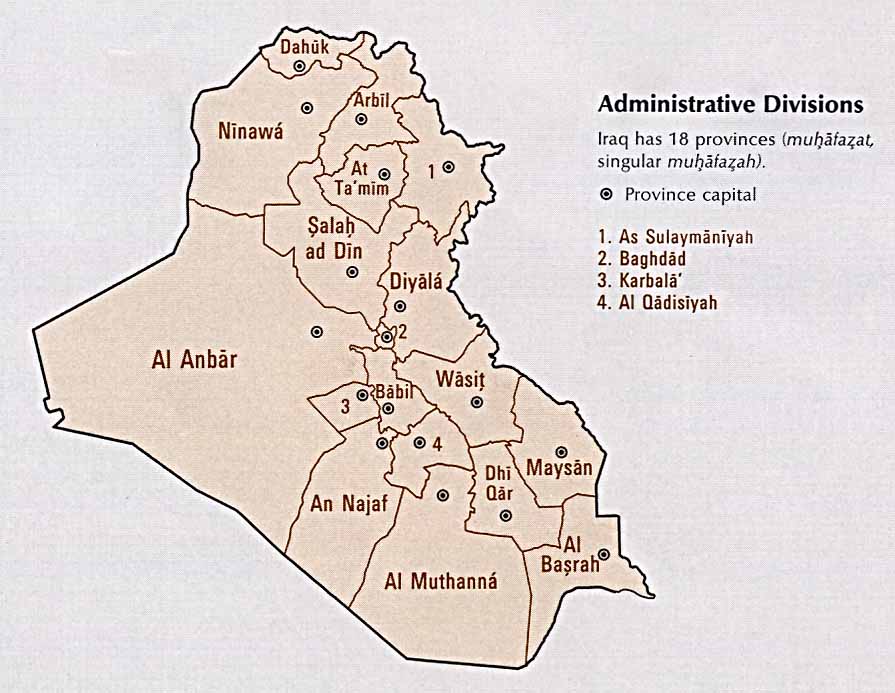
In Iraq, talks are underway between the PUK and KDP to form a new Kurdish regional government.

UN reports more than 200 mass graves found in areas formerly controlled by IS. The process of exhumation is just beginning.

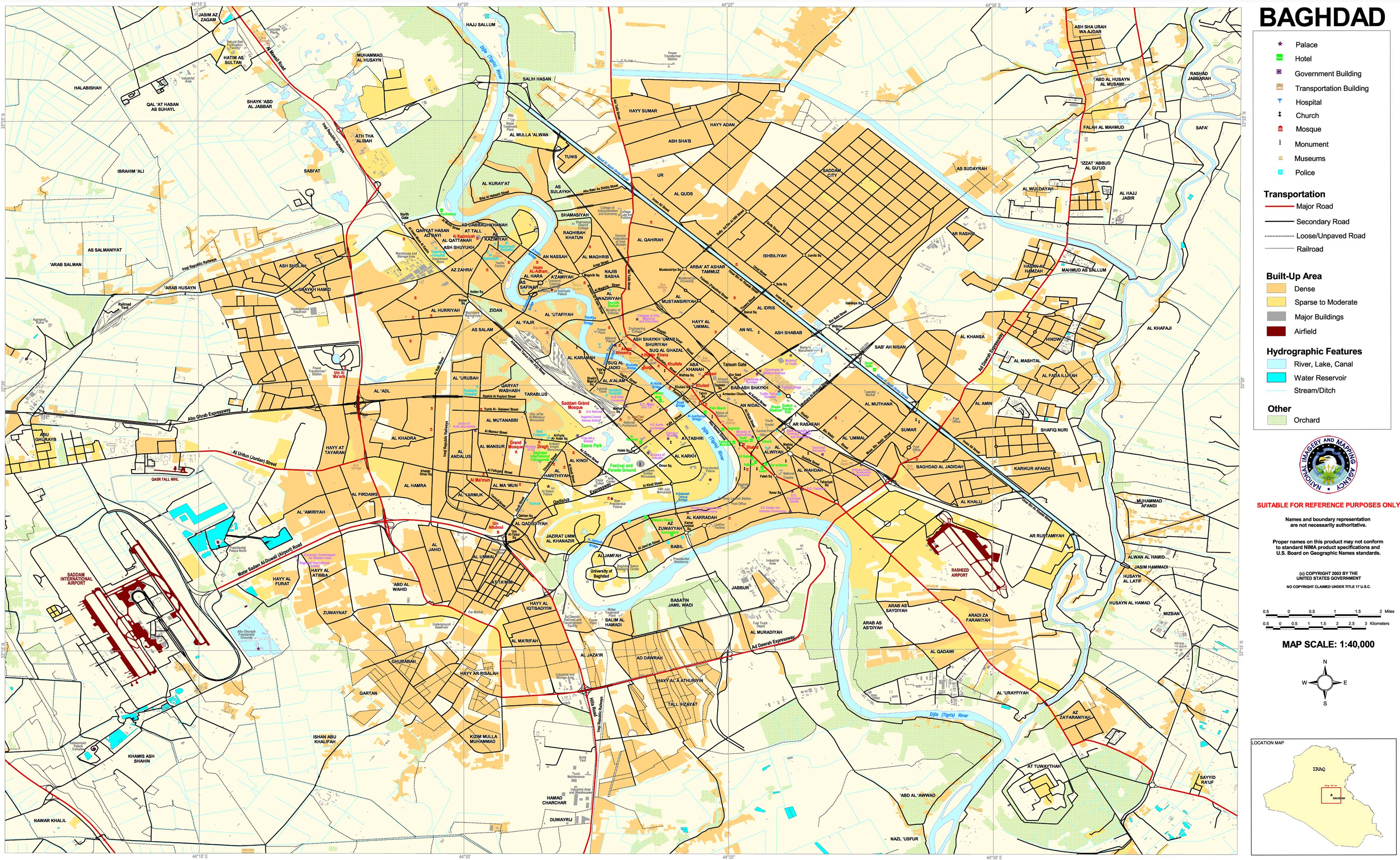
Multiple bombings in Baghdad kill 6 civilians. These targeted predominantly Shiite districts.

Newly elected Prime Minister Adel Abdul-Mahdi says that the Shiite militias known as Popular Mobilization Forces will not be disbanded. Most of these are linked to Iran.

Abdul-Mahdi is apparently ready to announce his slate of ministers.  Minor posts have been filled but the major appointments have been held up in political disputes.

Hundreds of tons of farmed carp have died in the Euphrates, as water pollution grows worse.

Monday, November 5, 2018

Update for Monday, November 5, 2018

Army Major Brent Taylor, 39, of the Utah National Guard was fatally shot on November 3 by a Afghan National Defense and Security Force. Major Taylor was on leave from his office as mayor of North Ogden, Utah.

Taliban attack on two checkpoints in Ghazni results in deaths of 13 members of the Afghan security forces. The checkpoints were set up recently to cut off Taliban supply routes. They were completely destroyed.

U.S. drone strike in Laghman said to kill 3 militants. These appear to have been Taliban, which suggests the U.S. is not limiting its direct combat operations to IS targets as has sometimes been asserted.

Afghan government's territorial control reaches a record low.

It is unclear whether the Taliban will attend peace talks scheduled for November 9 in Moscow.


Sunday, October 21, 2018

Update for Sunday, October 21, 2018

Polls close in long-delayed parliamentary elections in Afghanistan after the electoral commission extended voting by a day because of shortages of materials and problems with voting systems at many locations. Results will not be known for weeks.

In rural areas, threats of violence suppressed the vote in many locations.

Many polling stations did not open in Helmand province on Saturday. It is unclear if they opened on Sunday.

Roadside bomb in Nangarhar kills 11 civilians.

Four election observers are abducted and murdered in Mazar Sharif.

Suicide bomber kills 15 people at a polling station in Kabul on Saturday.

Official figures show 170 casualties in violence on Saturday, this link has a roundup of reported attacks. The tally for Sunday has not been announced.


Thursday, October 18, 2018

Update for Thursday, October 18, 2018

I'm sorry for abandoning this blog for a while. I guess I was overtaken by the same feelings that are widespread right now in Afghanistan and Iraq, a kind of despair leading to apathy. Here is Mujib Mashal in the New York Times.

In the past 17 years of war and crisis in Afghanistan, no one remembers a season quite like this one, with peril and hopelessness at every turn. . . . If there is a common theme in this upswell of alarm and worry that seems so widespread, it is a sense that no one sees any clear path through a minefield of crises.
The daily death toll in the war is often 100 or more, the security situation continues to deteriorate, and political divisions threaten the stability of the government. The Taliban appear unwilling to accept any peace agreement that honors democratic norms or the status of women, while the terror campaign by IS has heightened fears and sectarian divisions. Whether the upcoming election will be credible, and whether the results will be generally honored, is questionable. And the deteriorating relations of the U.S. with Pakistan, Iran and Russia are leading those countries to provide support to the Taliban. Pakistan continues to shelter the Taliban leadership. Anyway, read the whole thing.

The situation in Iraq may be somewhat more hopeful. I will address it soon.

Update: Attacker kills police chief of Kandahar province Gen. Abdul Raziq Achakzai,  following a meeting with U.S. General Scott Miller, commander of U.S. and NATO forces in Afghanistan. Two Americans and one foreign national employed by the U.S. government are injured. General Miller was present but uninjured.  Story is here. Further details from The Guardian, which says that Kandahar provincial spy chief Abdul Monin was also killed, and that Governor Zalmai Wesa and regional army commander Nabi Elham are hospitalized, apparently with severe injuries. The gunman was a member of  Razik's guard detachment.

Monday, September 10, 2018

Update for Monday, September 10, 2018

Violence and chaos erupt around Afghanistan.

Taliban overrun a district in Jawzjan, at least 30 government forces killed or injured.

Fighting in Sar-e-Paul over two days has left at least 17 security forces dead. The toll is said to be provisional and may be much higher. Additional fighting is said to be underway on the highway to Jawzjan, and in fighting was under way on the main highway into neighboring Jawzjan province, and Taliban forces appeared to be gathering in Sheram to the east of the city.

Taliban capture four security posts in Faryab, with 17 government casualties reported.

Suicide bomber in Kabul attacks crowd commemorating the death of Ahmad Shah Masud, a Tajik leader who was assassinated in 2001 shortly before the U.S. invasion. His supporters were firing randomly into the air while driving through the streets. Police arrested some 100 demonstrators. Seven were killed in the suicide bombing.

Fighting in Samangan leaves 13 police and 4 Taliban dead.

Mortar kills 6 civilians in Helmand.

The U.S. threatens to arrest any judges of the International Criminal Court who charge U.S. soldiers for actions in Afghanistan. Really.

Pakistani commentator Imtiaz Gul considers the carnage in Afghanistan.

U.S. Secretary of Defense James Mattis is in Kabul.

Saturday, September 8, 2018

Update for Saturday, September 8, 2018

The corporate media in the U.S. are now largely ignoring Iraq. It seems that having squandered a couple of trillion dollars, four thousand dead troops and who knows how many more wounded, and managing to bring about the deaths of a million or so Iraqis, now that unpleasantness is over and there's no reason for us to pay any attention to what's going on over there.

So, we will take note here that there has been a complete collapse of civil order in Basra as protesters trash every government building, political party headquarters, and facilities of Iranian-backed militias and the Iranian consulate. The water is undrinkable and people who have been poisoned are lying in hospital corridors untreated. Most of the time there is no electricity in 120 degree heat.

Protesters set fire to the Iranian consulate. I have not been able to find reports of the extent of the damage, but personnel all escaped unharmed. However this Reuters photo seems to show that the building was essentially gutted although it has a concrete exterior.

Of course Iraqi government officials are blaming everybody but themselves. 

Iraq's parliament is in emergency session as PM Abadi promises to violently repress the protests.

Interestingly, the U.S. State Department has implicitly condemned the assault on the Iranian consulate, without specifically naming it.


Mortar shells also fell in the Green Zone in Baghdad.

Stay tuned.

Monday, September 3, 2018

Update for Tuesday, September 3, 2018

One U.S. service member is killed, a second injured in an apparent "insider" attack in eastern Afghanistan. No further information is available as of now.

Note that General Scott Miller has taken over from Gen. John Nicholson as commander in Afghanistan. In Gen. Nicholson's departing remarks he says "It is time for this war in Afghanistan to end" and calls for peace negotiations.

Militants attack three schools in Paktika. No-one was present but severe damage forced the schools to close.

U.S. says it has killed Abu Sayed Orakzai, the leader of ISIS Khorasan Province, the IS affiliate in Afghanistan.

Taliban capture a district in Balkh.