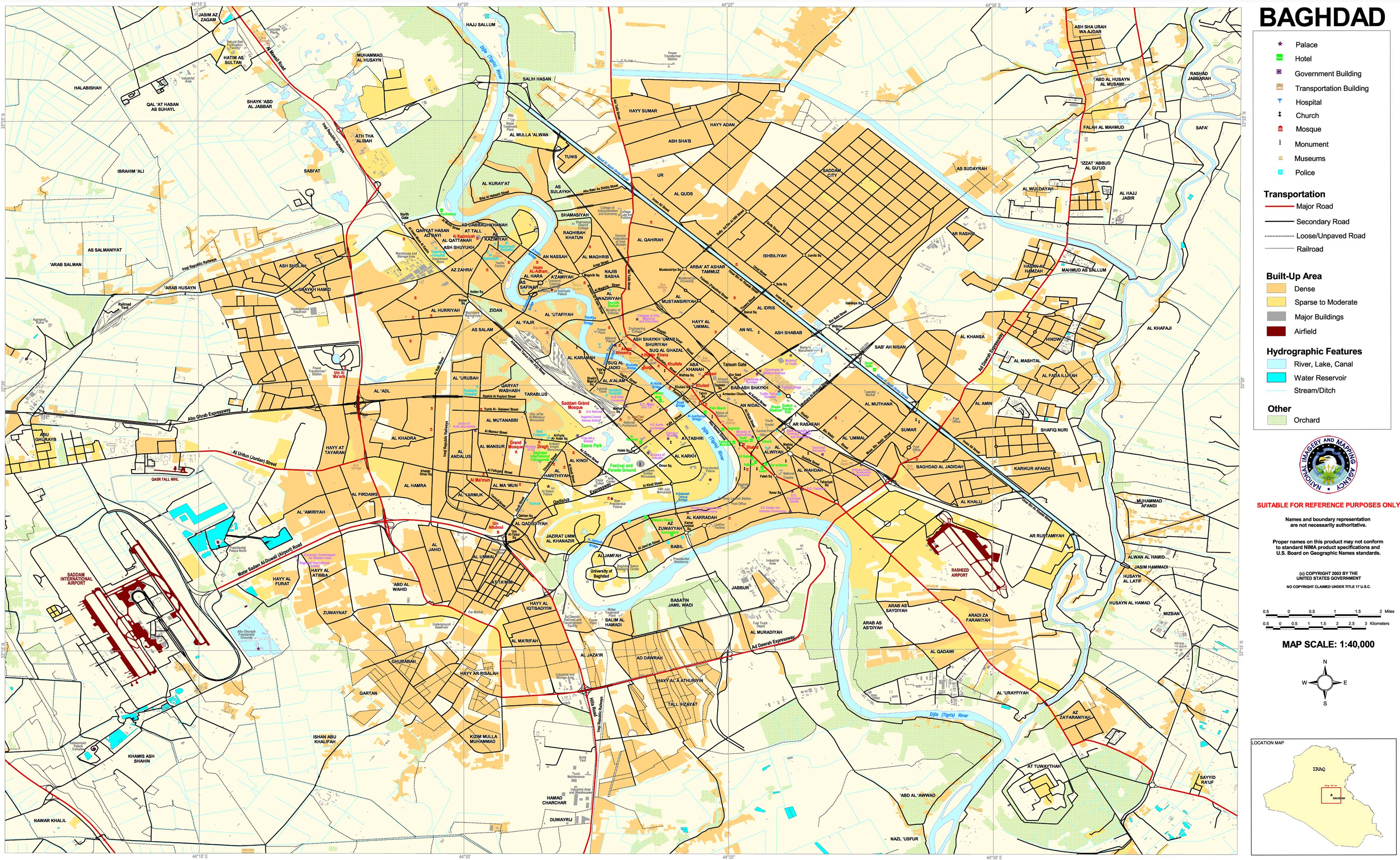
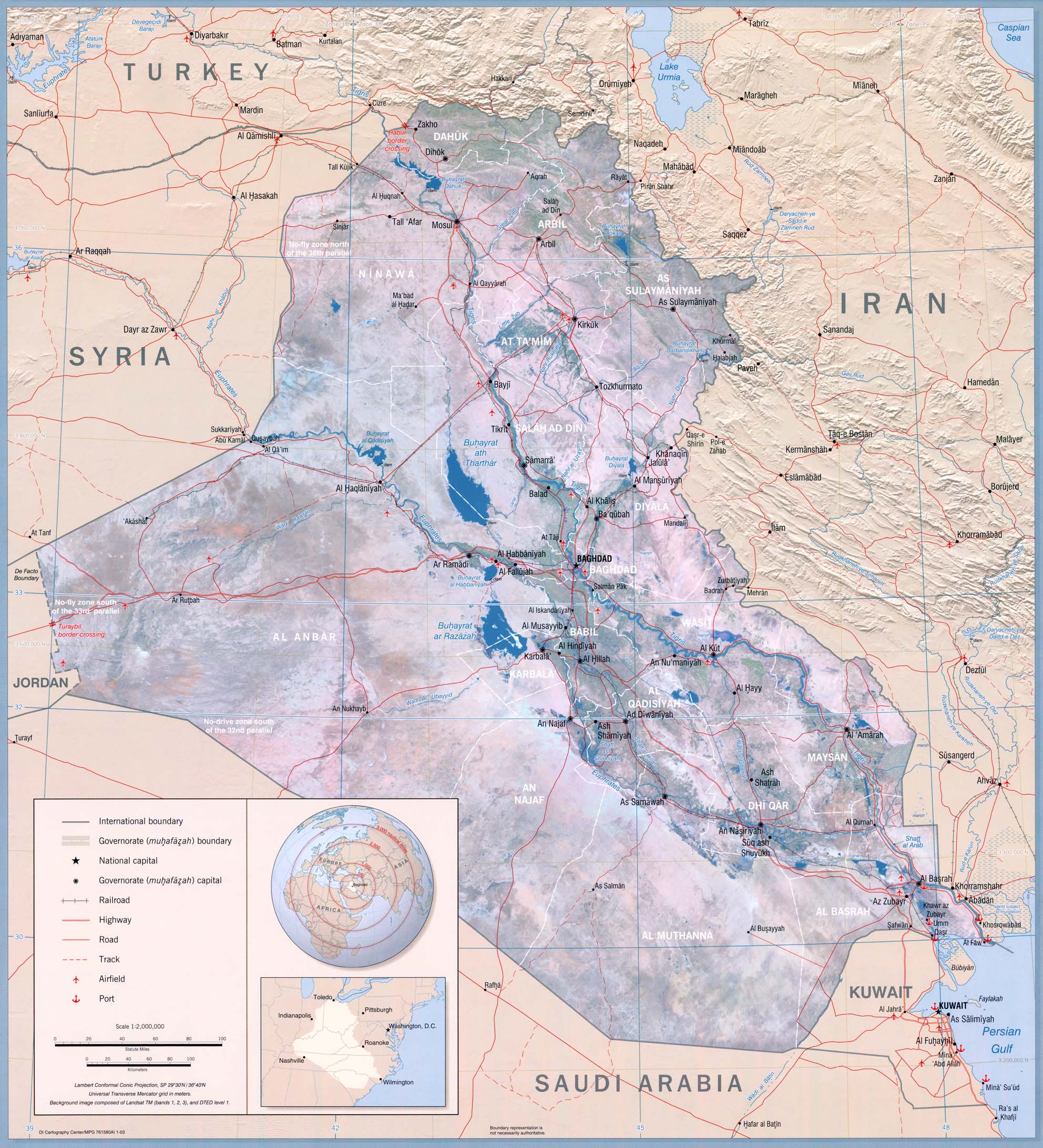
In what appears to have been essentially a symbolic action, Iran fires some dozen ballistic missiles from its own territory toward bases in Iraq where U.S. troops are housed.
There were no reported casualties, and these weapons are sufficiently accurate that it is likely the avoidance of casualties was intentional. Iraqi acting PM Abdul-Mahdi says he received advance notice of the action. Furthermore, as the Iranians no doubt anticipated, Abdul-Mahdi tipped off the U.S. to the expected attack.
Nevertheless the tension has prompted the Philippines to evacuate its citizens from Iraq and Iran, Poland has evacuated its ambassador and Slovenia is relocating its forces to an undisclosed safer location. Many airlines are re-routing flights from the region, including these additional carriers.
The FAA has barred all U.S. civilian flights over the entire region.
India and Pakistan advise their citizens not to travel to Iraq.
Amid anxiety among the Gulf states, both Kuwait and Qatar deny that the drone that killed Qassem Suleimani originated from their territory. However, news reports from Iraq say it did originate in Kuwait.
Kurdish leaders call for continued support from the U.S.-led coalition, as Kurdish MPs boycotted the vote calling on U.S. forces to leave Iraq.
William Saletan runs down U.S. Secretary of State Pompeo's lies about the killing of Soleimani. They are multifarious and preposterous.
In a bizarre incident, the U.S. commander in Iraq, Marine Brigadier General William H. Seely III, sent a letter to Abdul-Mahdi, in both English and Arabic, saying "Sir, in due deference to the sovereignty of the Republic of Iraq, and as
requested by the Iraqi Parliament and the Prime Minister, CJTF-OIR will
be repositioning forces over the course of the coming days and weeks to
prepare for onward movement. We respect
your sovereign decision to order our departure.”However, after first saying that the letter was a fake perpetrated by Iranian intelligence, the Pentagon said it was a "mistake." Okay, these people know what they're doing.
In what so far appears to be a bizarre, tragic coincidence, a Ukraine International Airlines flight crashed shortly after take-off from Tehran, killing all aboard. The Ukrainian embassy says the cause was engine failure, although the plane was a fairly new Boeing 737 which had recently undergone scheduled maintenance. The conflict between Iran and the U.S. does hamper the investigation, as Iran will not cooperate with Boeing.
In Afghanistan, two Afghan military died in a helicopter crash in Farah. Officials attribute the crash to mechanical failure.
A UK official apologizes for "unacceptable" actions by British forces in Afghanistan following an investigation by the Sunday Times and BBC. The accusations include a cover-up of the murder of four civilians by a British soldier.
In 2019, more than 12,500 Afghans were killed in and 9,800 injured in the conflict. This report breaks casualties down by mechanism of violence and location.
Wednesday, January 8, 2020
News of the Day for Wednesday, January 8, 2020

Sunday, January 5, 2020
Update for Sunday, January 5, 2020
So events have mandated that I restart this blog. As you will notice, I also had to change the title. It no longer makes sense to label the U.S.'s endless war by specific countries.
As predicted, the Iraqi Parliament has voted to expel U.S. troops from the country. In fact the resolution calls for the entire U.S. led coalition to exit the country. PM Mahdi has indicated that he will sign the measure. [I should note that it does not seem feasible for U.S. troops to remain in Syria if they do not have support bases in Iraq. The U.S. has no other access to Syrian territory. -- C] Mahdi also says that Soleimani was in Baghdad at his invitation, as he was mediating a dialogue between Iran and Saudi Arabia.
Accordingly, the coalition has suspended operations against IS to focus on force protection:
A statement on Sunday from Operation Inherent Resolvesaid the US-led coalition was “fully committed” to protecting its bases in the light of “repeated rocket attacks” from pro-Iranian militias over the past two months. “This has limited our capacity to conduct training with partners and to support their operations against Daesh [Isis], and we have therefore paused these activities, subject to continuous review,” the coalition said.The UN special envoy for Afghanistan says that events in Iraq will hinder peace negotiations in Afghanistan.
Keep in mind that the militia leaders killed along with Soleimani were in fact Iraqi military officers.
The European Union has invited the Iranian Foreign Minister Javad Zarif to Brussels to discuss the situation.
Iraq's Foreign Ministry has summoned the U.S. ambassador, saying the drone attacks that killed General Qassem Soleimani and Iraqi militia leader Abu Mahdi al-Muahndis, and other militia members, were "a flagrant breach of Iraq’s sovereignty and of all international laws and norms that regulate relations between countries and prohibit the use of their lands to carry out attacks on neighbouring countries."
Iran will shortly announce further renunciation of elements of the nuclear agreement.
Pentagon officials were reportedly astonished by the decision to assassinate Soleimani. They had not expected the president to take the option seriously.
I will provide another update soon, and will try to resume daily posting if events warrant.
Monday, May 20, 2019
Update for Monday, May 20, 2019
The hostile and threatening rhetoric from the U.S. administration toward Iran has escalated to a threat of national extermination from the president.
“If Iran wants to fight, that will be the official end of Iran,” Trump tweeted. “Never threaten the United States again!He did not state what this is in response to, as Iran has not threatened the United States and in fact the Iranian regime has stated clearly that it is not threatening the U.S. and does not want war.
It is possible that this was in response to a rocket exploding in the Green Zone about half a kilometer from the U.S. embassy, which caused no damage or casualties. No-one has taken responsibility. In fact the Iranian-backed Hezbollah brigades has denounced the attack, as have other pro-Iranian factions.
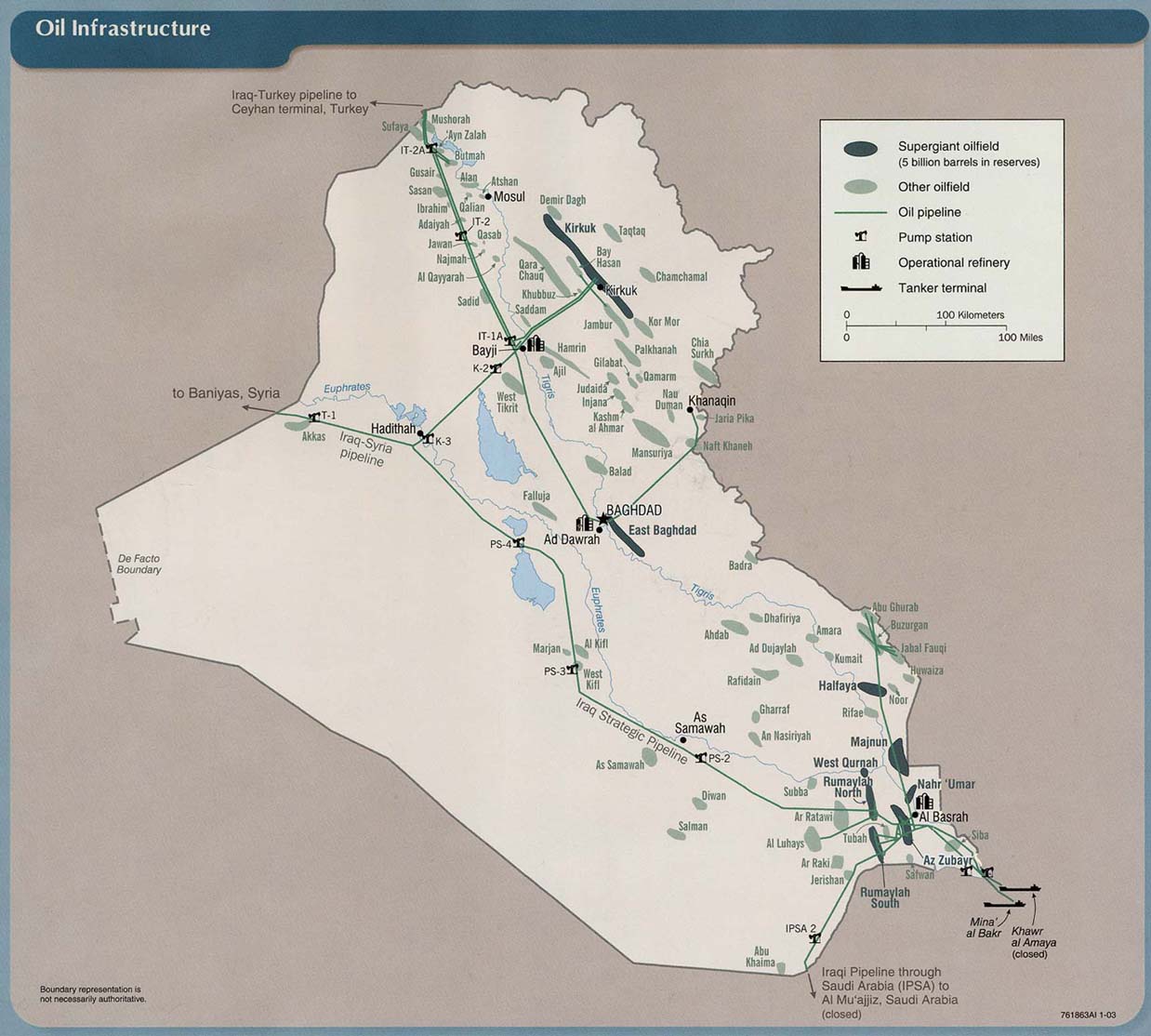
In the midst of this war of words, Exxon-Mobil has withdrawn foreign staff from an oil field in southern Iraq, angering the Iraqi oil minister who denounces the move as "political" and unrelated to real security concerns. "For us, this withdrawal is unacceptable and unjustified because other international companies are working freely and safely in developing oil fields," Ghadhban added.
Iraqi Shiite political leader Muqtada al-Sadr warns that Iraq could not surive a war between the U.S. and Iran and urges Iraqis to unite against such a possibility.
Cheryl Rofer asks what could be the objectives of a U.S. war against Iran. The U.S. administration has not articulated any.
Iraq's president makes it clear that he is talking with Iranian and U.S. officials and making it clear that Iraq wants no part of a war between the two, while U.S. Secretary of State Mike Pompeo warned Iraqi leaders that if they are not going to stand with the US against Iran, then they should stand aside.
I will just note that as disastrous as the 2003 invasion of Iraq was for Iraqis and for the United States, Iran has more than twice the population of Iraq (81 million vs. 38 million), a vastly more capable military, and a more unified populace. The U.S. would have no real allies in such a conflict -- Israel and the Saudis would cheerlead but that's about all. And of course the idea that Iran is somehow a threat to the United States is completely preposterous. John Bolton, for reasons he has never really articulated, has wanted to go to war with Iran for more than a decade. As far as I can tell, that it is the basic reason for what is going on now. --- C
Wednesday, May 15, 2019
Update for Wednesday, May 15, 2019
I really hope I don't need to add another country to the title of this blog and take up daily posting again. It is not at all clear what is going on with all this saber rattling by the U.S. regarding Iran, but I probably should have taken it up here a week ago.
The U.S. has ordered non-essential diplomatic personnel to leave Iraq, including not only the embassy in Baghdad but also the consulate in Erbil, claiming intelligence showing a threat of attacks on U.S. officials or forces by Iranian-backed militias.
However, British general Chris Ghika, who is deputy commander of Operation Inherent Resolve, denies that there is any threat.
Iraqi PM Mahdi says he expects that "things will end well" between the U.S. and Iran while Iran's Supreme Leader Ayatollah Kahmenei rules out any war between the U.S. and Iran.
The mysterious reports that four oil tankers were attacked off the coast of the United Arab Emirates are adding to the confusion and concern. Spokespeople for the U.S. administration initially tried to cast blame on Iran, but the UAE has not made any attribution of responsibility. These incidents are in any case very strange. Despite initial reports of severe damage and fires, there were in fact no fires, the damage appears to be minor if indeed this happened at all, and it is unclear what motive anyone would have for this action.
The U.S. president has denied reports that the Pentagon presented him with a plan to deploy 120,000 troops to the region, while saying he would send "a hell of a lot more than that" if it came to war with Iran. (The U.S. has also said it is dispatching an aircraft carrier task force to the region in response to the purported renewed threat from Iran, but in fact the deployment was planned months ago and is part of the routine rotation of carrier groups.)
We'll see what all of this means, if anything, but I will keep this site current for the next few days at at least.
Saturday, April 20, 2019
Update for Saturday, April 20, 2019
Today I'm going to focus on Iraq. As I did last week for Afghanistan, I want to establish the context.
The Iraqi parliament is hosting a meeting of regional nations including rivals Iran and Saudi Arabia. It remains to be seen where this will go, but it is noteworthy that Iraq is an important Arab nation that has close relations with Iran and is also trying to establish good relations with the Gulf states. Perhaps it can play a role in moderating regional tensions. Newsweek's Tom O'Connor discusses this possibility and briefly reviews some relevant history.
A senior Iraqi MP says Iraq is indeed trying to mediate between Iran and Saudi Arabia.
Indeed, Iraq and Saudi Arabia have executed a security agreement.
The Institute for the Study of War is a hawkish think tank closely allied with the U.S. military, which I mention because otherwise somebody might likely point it out. Nevertheless their assessment of the status of IS is credible and includes some helpful recent history. For some reason there hasn't been a lot of attention paid to this by U.S. media or politicians, but with the conquest of the last territory held by IS the Syrian Democratic Forces accepted the surrender of some 55,000 women and children, many or most of whom remain loyal to IS, and transferred them to a camp near the Iraq border. Nobody seems to have a good idea of what to do about this situation. ISW is reporting that meanwhile, IS is rebuilding its guerilla networks in Iraq and producing numerous bomb attacks. Iraqi forces continue a campaign against IS in northern Diyala province. So no, this is not over.
As for the U.S. presence, the DoD does not state publicly how many U.S. forces are in Iraq and Syria. Since I'm a U.S. taxpayer and voter, I tend to resent that. However, there are 5,200 U.S. troops known to be in Iraq, probably not counting some special forces and mercenaries. The U.S. has said they will stay there "as long as needed," with the stated need being to combat IS. However it is not clear that U.S. troops have an important or necessary role in that campaign, and many Iraqi politicians have called for U.S. forces to leave. President Trump stated publicly that the rationale for U.S. forces to remain in Iraq was to "watch Iran," a proposition universally rejected in Iraq.
Saturday, April 13, 2019
Update for Saturday, April 13, 2019
This is the first of planned regular weekly posts. I want to begin by recommending this year by year timeline of the U.S. war in Afghanistan from the Council on Foreign Relations. Among the highlights are Donald Rumsfeld declaring an end to "major combat" in May, 2003, when there were only 8,000 U.S. troops in the country; followed immediately by the expansion of the NATO mission to a total of 65,000 troops from 42 countries. In May 2005 U.S. president Bush and Aghan president Karzai signed an agreement to:
strengthen U.S.-Afghan ties and help ensure Afghanistan's long-term security, democracy, and prosperity." Moreover, the agreement calls for Washington to "help organize, train, equip, and sustain Afghan security forces as Afghanistan develops the capacity to undertake this responsibility," and to continue to rebuild the country's economy and political democracy.By July 2006 violence was surging around the country:
"As with most insurgencies, the critical precondition [to the Afghan insurgency] is the collapse of governance," says Afghanistan expert Seth G. Jones. Jones and other experts point to the many Afghans who lack basic services, the government's difficultly setting up its police forces, and the lack of international forces to assist with security.By November of that year U.S. secretary of defense Robert Gates was criticizing NATO for not sending more troops. In 2008 U.S. air strikes killed large numbers of civilians, alienating the population. In 2009, president Obama recommitted to Afghanistan and sent 17,000 more troops, at the same time promising to withdraw by 2011. In March, Obama sent 4,000 additional troops and pledged to bring about an end to Pakistani support for the insurgency. In July, U.S. marines launched a major offensive in Helmand province. By August there were more than 65,000 U.S. troops in the country. In December, Obama announced another major escalation.
In November 2010 NATO agreed to hand over full responsibility for security to the Afghan government by 2014, beginning in stages in 2011. The 100,000 U.S. forces then in the country were to hand over responsibility first in relatively stable places. Obama announced that withdrawal of troops would begin and that 33,000 would be removed by the summer of 2012. By that time, after a decade of war, the U.S. had spent $444 billion and lost 1,800 troops. In 2012 secretary of defense Leon Panetta announced that the U.S. combat role would end in 2013.
Afghanistan officially took responsibility for security in June 2013, and Obama announced that only 9,800 forces would remain in a purely training and advisory role, although special forces would confront al Qaeda. But in 2017, with the insurgency continuing to erode government control, president Trump announced he would be sending several thousand additional troops. In 2017 he pledged an open-ended commitment. But by 2018 the Taliban were carrying out bold attacks in the capital and elsewhere around the country. Currently the U.S. and Taliban are engaged in peace talks, so far futile, and it is unclear whether U.S. troop withdrawals will be contingent on an agreement.
Although there hasn't been an official announcement, it is obvious that U.S. troops are engaged in combat against the Taliban. However, here's some of what happened in just the past few days.
Taliban attack a police convoy in Ghor, killing 7, including the head of security operations for the province.
Taliban announce a spring offensive with the aim of "eradicating occupation" and "cleansing our Muslim homeland from invasion and corruption," the Taliban said in a statement.
Four Romanian troops are injured in an attack in Kandahar.
Taliban attack Kunduz from four directions, so far are repelled.
Government claims 27 Taliban killed in a battle in Nangarhar, with 2 government forces dead. [These very lopsided reported casualty totals are common, it's unclear whether they are reliable. They are not confirmed by independent journalists.]
Government says it repulsed an attack in Faryab killing 11 militants.
So here's the question. With the support of tens of thousands of highly trained, heavily armed and well equipped North American and European forces; hundreds of millions of dollars in military aid including an air force and armored vehicles; air support from the U.S. including drones, fighter jets, and gunships -- why is the Afghan government losing to an insurgency that has no recognition or declared financial or military support from a single country. Yes, they get safe haven in Pakistan and probably get access to weapons and some other help from Pakistan, but that's it. There have been reports of arms from Iraq given to Taliban forces near the Iranian border. That's somewhat dubious due to their ideological differences, but Iran might want to have influence in that region.
Otherwise, the asymmetry of the situation is astounding. The Taliban don't need foreign trainers, or advisers, or money. They have no air support whatever. They have little or no artillery and only a few armored vehicles that they have managed to capture by overrunning government military bases -- something they do quite frequently. And they are winning.
Tuesday, April 9, 2019
Update for Tuesday, April 9, 2019
I suspended posting here because the U.S. presence in Iraq and Afghanistan continues, with no real end or purpose in sight; and because Americans have largely forgotten about both of those countries. I felt that I was just yelling at the clouds, and my time was better spent on other projects.
The occasion of four more U.S. combat deaths in Afghanistan, while obviously a small event compared to the suffering of Afghanistan's people, brings me back to make a formal administrative statement. I don't know if anyone is reading, but I would like to set up a regular schedule to post here to follow longer-term developments, such as they are.
With the elimination of IS-held territory in Iraq and Syria, the situation in Iraq has settled into what seems a stagnant situation of corrupt and incompetent government, low-level guerrilla war by Islamist extremists, and little progress toward reconstruction or refugee resettlement. We have been given no rationale for the continued U.S. military presence there.
In Afghanistan, what looked like stalemate now looks like gradual erosion of territorial control by the Kabul government, and deteriorating security in spite of the massive ongoing investment in the government by the U.S. and allies. The U.S. is essentially trying to negotiate terms of surrender in order to withdraw its remaining forces (reminiscent of Vietnam), but that may yet turn out to be politically unpalatable in Washington.
Under the circumstances it seems to me that weekly posting might make sense here. My mission will be to provide an informational resource for people who are interested in the two countries, from the perspective of a U.S. citizen who has always dissented from both interventions. I principally care about the people of the two countries, but I also care about the welfare of the U.S. troops and civilians who serve there, who do not make policy choices. If anybody is interested, I will be here again, mostly on Saturdays.