A water main in Mosul is destroyed in fighting and much of the city is now without water, as food supplies are also running out.
UN warns that IS is continuing to abduct civilians for use as human shields.
IS is killing civilians who refuse to cooperate.
Amnesty International reviews atrocities by IS, and also by pro-government militias.
Iraqi forces move to flush IS from two villages well to the south of Mosul.
Full text of an AP interview with PM Abadi. He seems quite optimistic.
Air strike targeting IS south of Mosul on October 18 also killed several civilians. It is unknown whether the strike was carried out by Iraqi forces or the U.S.-led coalition. IS had taken over part of a clinic.
Tuesday, November 29, 2016
Update for Tuesday, November 29, 2016

Sunday, November 27, 2016
Update for Sunday, November 27, 2016
Iraqi parliament votes to recognize the mostly Shiite militias (Popular Mobilization Forces) as a part of the Iraqi army. This action has predictably divided the country. The legislation was passed by Shiite MPs as Sunni legislators boycotted the vote.
In the midst of the controversy, Iraqi forces continue to make slow progress in east Mosul.
Reuters offers some analysis of the situation.
The Turkish news agency Anadolu has further details on the battle.
Two mass graves of Yazidis are found by peshmerga.
Christian Caryl in the NYRB provides a history of the Kurdish people as they are on the cusp of having a nation. Well worth a read.
A group of British MPs want a new investigation of Tony Blair and the Iraq war.
Friday, November 25, 2016
Update for Friday, November 25, 2016
As I suggested recently, the Iraq theater is not separable from Syria and I will have to start paying attention to events there. (The border is artificial anyway.) A member of the U.S. military has been killed by an explosion near Ayn Issa, Syria. No further details as of now. (The town is just north of Raqqa, the IS capital, deep inside Syria, indicating that U.S. forces are deployed within the combat zone.)
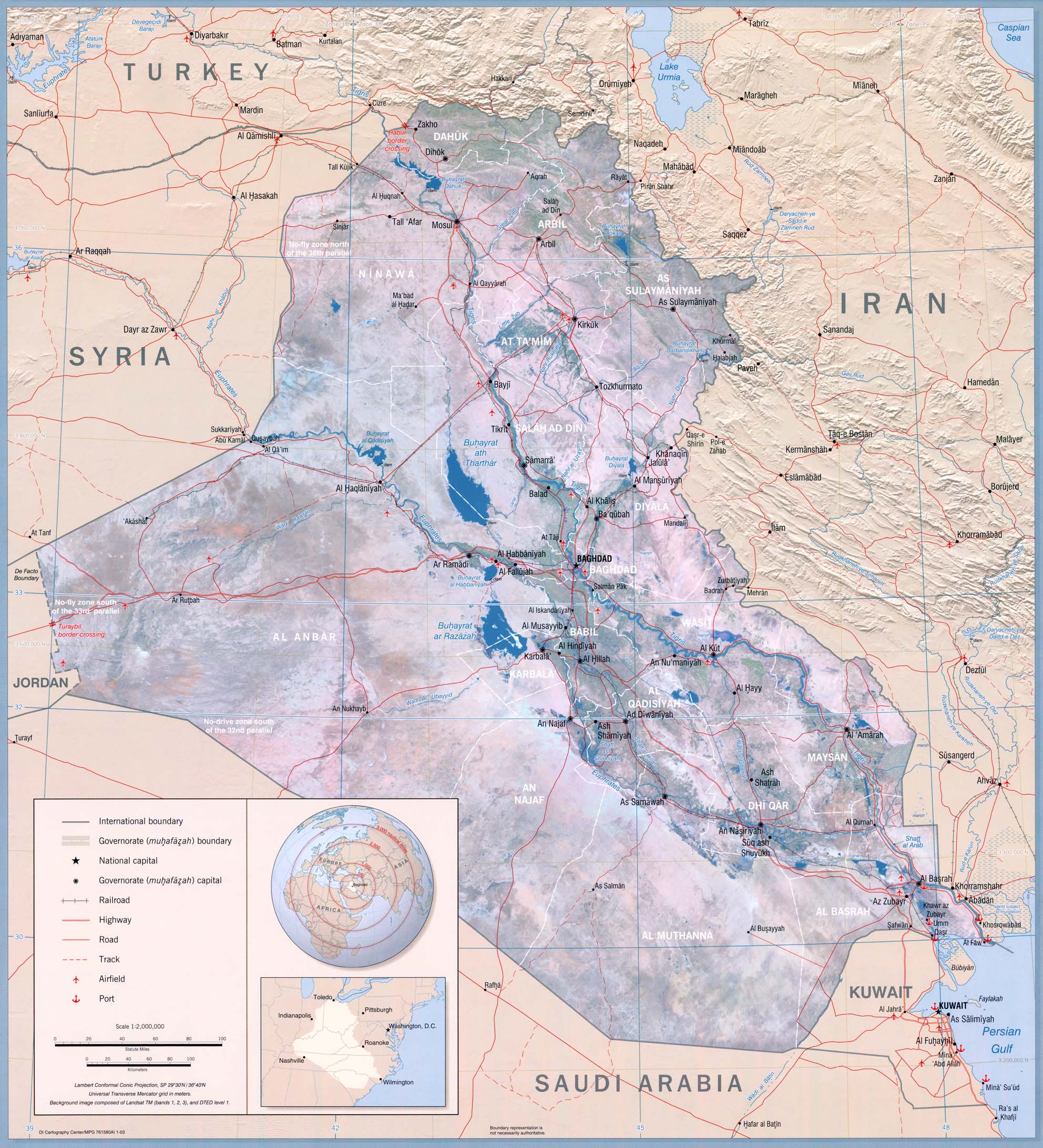
Iraq is preparing to assault the now besieged town of Tal Afar with a force of Sunni and Shiite Turkmen. The Iranian-backed militia which captured the surrounding region and cut off the town will remain outside.
IS continues to target civilians in areas of Mosul that have been recaptured by the Iraqi army. About 100 casualties are arriving daily at the hospital in Irbil.
The reported casualty total from the truck bomb attack on Shiite pilgrims continues to vary, but Iranian news agency reports that 71 bodies will be repatriated to Iran.
Meanwhile, food and water are running short.
Thursday, November 24, 2016
Update for Thursday, November 24, 2016
Tim Arango of the NYT reports that the decision by the Iraqi military to urge civilians in Mosul to remain in their homes has not turned out well. Civilian casualties are mounting, mostly from IS fire, while due to the presence of civilians the Iraqi military cannot use heavy weapons.
Truck bomb in Hilla kills as many as 80 Arbaeen pilgrims, including some Iranians.
Security forces carry out mass arrests in Anbar.
Asharq al-Awsat publishes a false story accusing Iranian Arbaeen pilgrims of impregnating hundreds of Iraqi women. Arrest warrants have been issued for two Iraqi journalists in the case. The publication is based in London and Saudi owned. (I sometimes link to it as it is generally reliable. However this incident highlights the intense sectarian hostility in the region and it is quite disturbing.)
Xinhua reports on the grim conditions in Mosul. Now that the city is besieged the only source of food will be the Iraqi army. It is not clear what will happen in IS held areas.
Wednesday, November 23, 2016
Update for Wednesday, November 23, 2016
Shiite militia severs the road from Tal Afar to Sinjar. Mosul is now completely surrounded.
Head of the Iraqi Sunni Endowment comes under fire while observing relief operations east of Mosul, but is unharmed.
Iraqi military says it has destroyed two bomb factories in Mosul with air strikes. This story also says that soldiers fired into the air to disperse civilians who were rushing a food distribution point in Zahra.
U.S. air power destroys another bridge across the Tigris, leaving only one intact crossing. (Video in the linked AP story shows civilians fleeing by foot.)
Iraq says its aircraft have killed Zeyad Kharoufa, chief propagandist for IS in Mosul.
Oil well fires closest to Qayyara are finally extinguished, bringing some relief to inhabitants.
Civilian casualties overwhelm a field clinic near Mosul. Most seem to be victims of IS mortar fire.
Monday, November 21, 2016
Update for Monday, November 21, 2016
As usual, the reported death toll varies somewhat, but a suicide bomb attack on a Shiite mosque in Kabul killed at least 27 people and injured 64. The worshipers were observing Arbaeen. The UN gives the death toll as 32.
The so-called Islamic State claims responsibility, in a statement issued in Arabic. The Taliban denies involvement.
A separate attack in Kabul kills a high ranking military officer and severely injures of Ministry of Defense staffer.
IRAQ
Having taken the Tal Afar airport, Shiite militias converge on the town with the intention of surrounding it. The Turkish government is concerned about how they may treat the Turkmen population of Tal Afar; it is not clear what the composition will be of the force that ultimately enters the town.
Civilians continue to flee eastern districts of Mosul where Iraqi forces have gained control.
A U.S. air strike a few weeks ago in Fadiliya, northeast of Mosul, is said to have killed 7 civilians. The U.S.-led coalition says it is investigating.
Iraqi forces in eastern Mosul are conducting house-to-house searches for car bombs and other threats. Meanwhile a U.S. airstrike has destroyed a bridge over the Tigris, apparently to limit the ability of IS to support its fighters in eastern Mosul from its stronghold on the west side of the city. Presumably once the east is secured, the army will use pontoon bridges to cross the river.
Efforts continue to extinguish the oil well fires in Qayyara, slowed by mines.
SPECIAL NOTE
I have so far resisted covering incidents outside of Iraq and Afghanistan, simply because mission creep could end up overwhelming me. However, the theater is wider of course, and Syria is an integral part of the same war that is happening in Iraq. U.S. troops are stationed around the regionin support of the effort, including in Jordan. Three American soldiers were killed in Jordan earlier this month. At the time, Jordanian authorities claimed that they had failed to stop at a checkpoint entering the military base where they were stationed. However, it now appears they were murdered. The shooter, a Jordanian soldier, is in a medically induced coma and has not been questioned.
Friday, November 18, 2016
Update for Friday, November 18, 2016
After pausing on Thursday due to bad weather and to consolidate positions, Iraqi forces resume their expansion in Mosul as civilians flee and IS pledges continued suicide attacks. (I would have to think, however, that the number of potential suicide attackers is finite. Also, these attacks slow down Iraqi forces and are unnerving, but they are mostly ineffective.)
Tension continues between Erbil and Baghdad over Kurdish vow to retain territory they have captured in the Mosul area.
Shiite militias take Tal Afar airport with support from Iraqi air and ground forces. They also say they are cutting the road between Mosul and Raqqa, which would leave Mosul fully besieged.
Iraqi forces take additional villages southeast of Mosul advancing past Nimrud.
Iraqi Red Crescent gives number of displaced civilians in Mosul battle as about 80,000.
Thousands of Christian gather in Erbil for a day of prayer while Shiite pilgrims converge on Karbala for Arba'een.
Children return to school in Qayyara, resuming a normal curriculum after IS occupation. Teachers are concerned that the children have become more aggressive and violent due to their experiences.
Subscribe to:
Posts (Atom)